


Milpa: Learning from corn, beans and squash (2023)
Rosario Talevi, Lorene Blanche, Alizée Sérazin
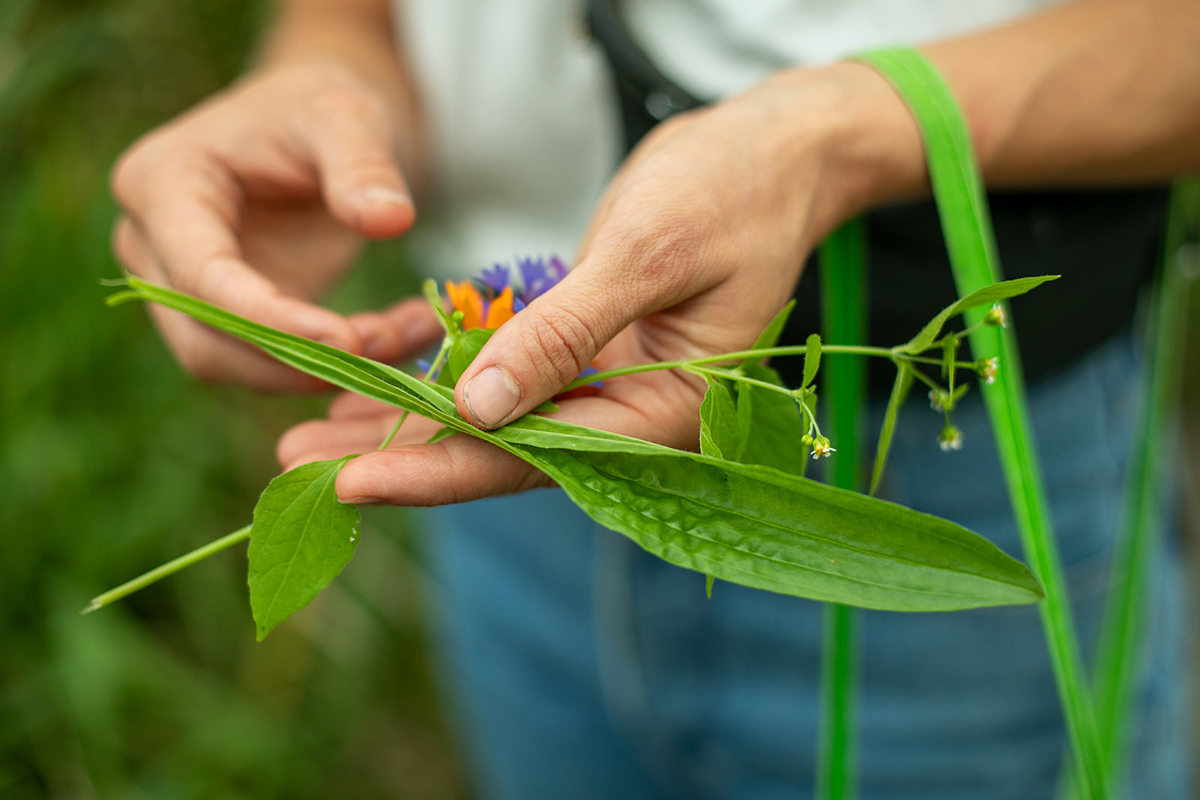
Milpa during Climate Care Festival 2023. Photos (c) Mor Arkadir
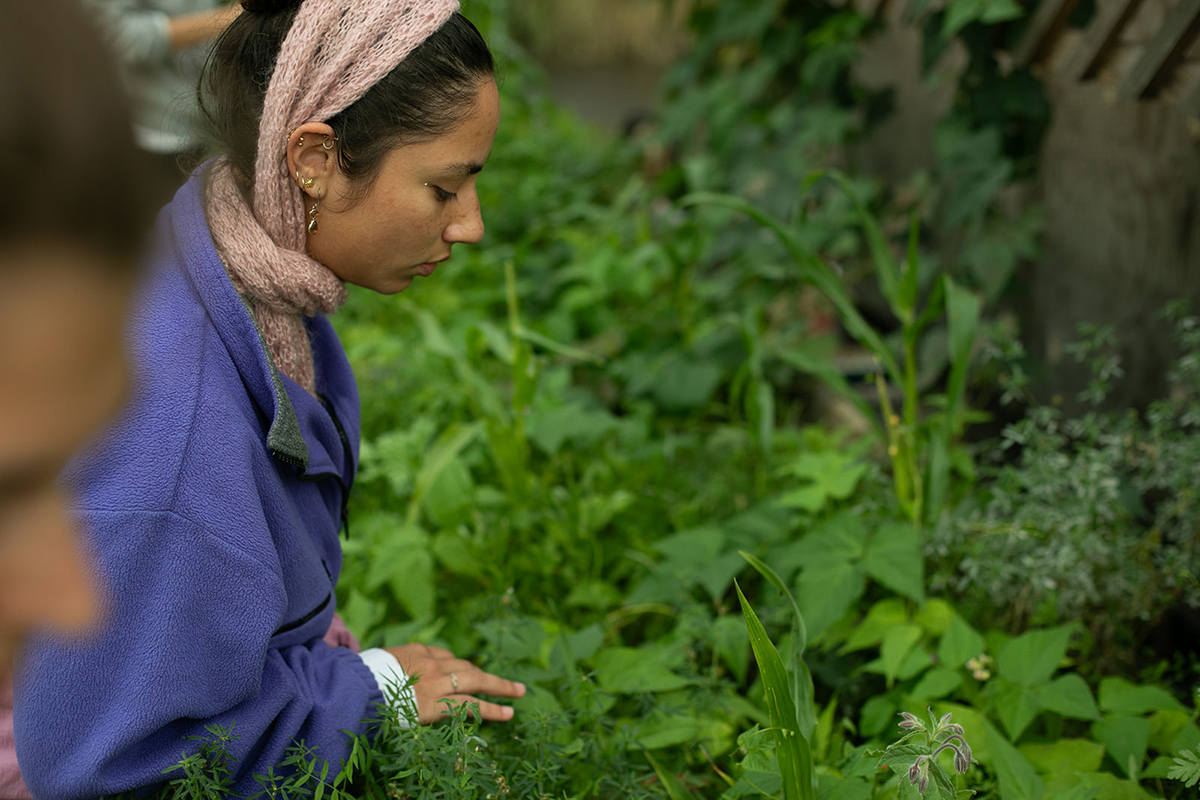
Milpa during Climate Care Festival 2023. Photos (c) Mor Arkadir
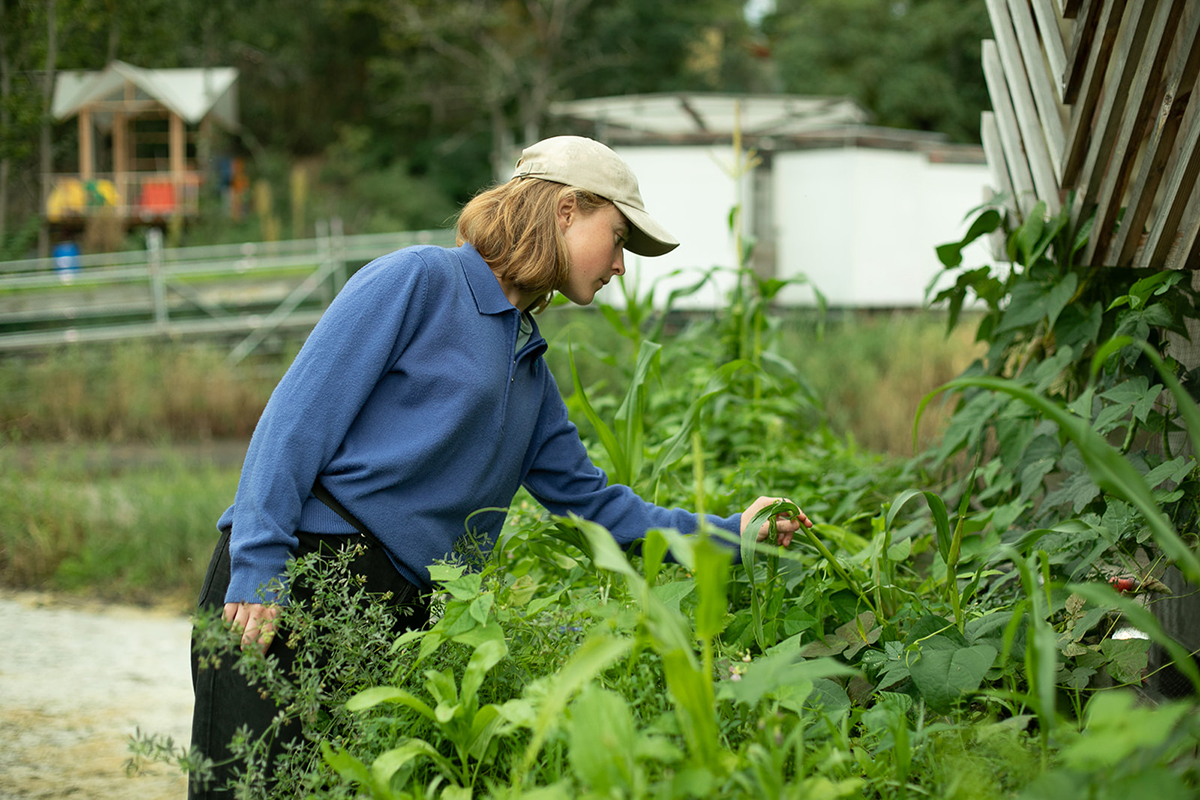
Milpa during Climate Care Festival 2023. Photos (c) Mor Arkadir
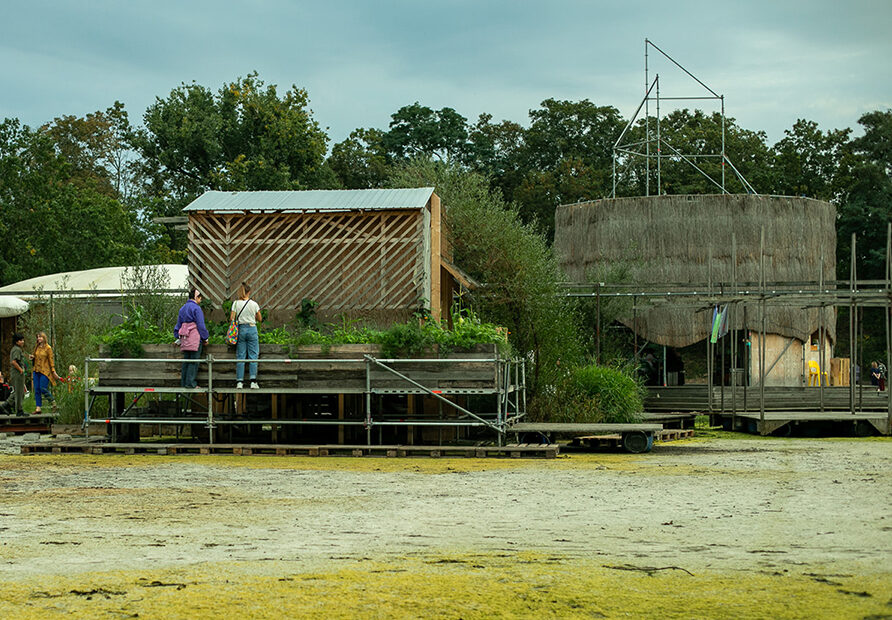
Milpa during Climate Care Festival 2023. Photos (c) Mor Arkadir
Milpa during Climate Care Festival 2023. Photos (c) Mor Arkadir
Milpa during Climate Care Festival 2023. Photos (c) Mor Arkadir
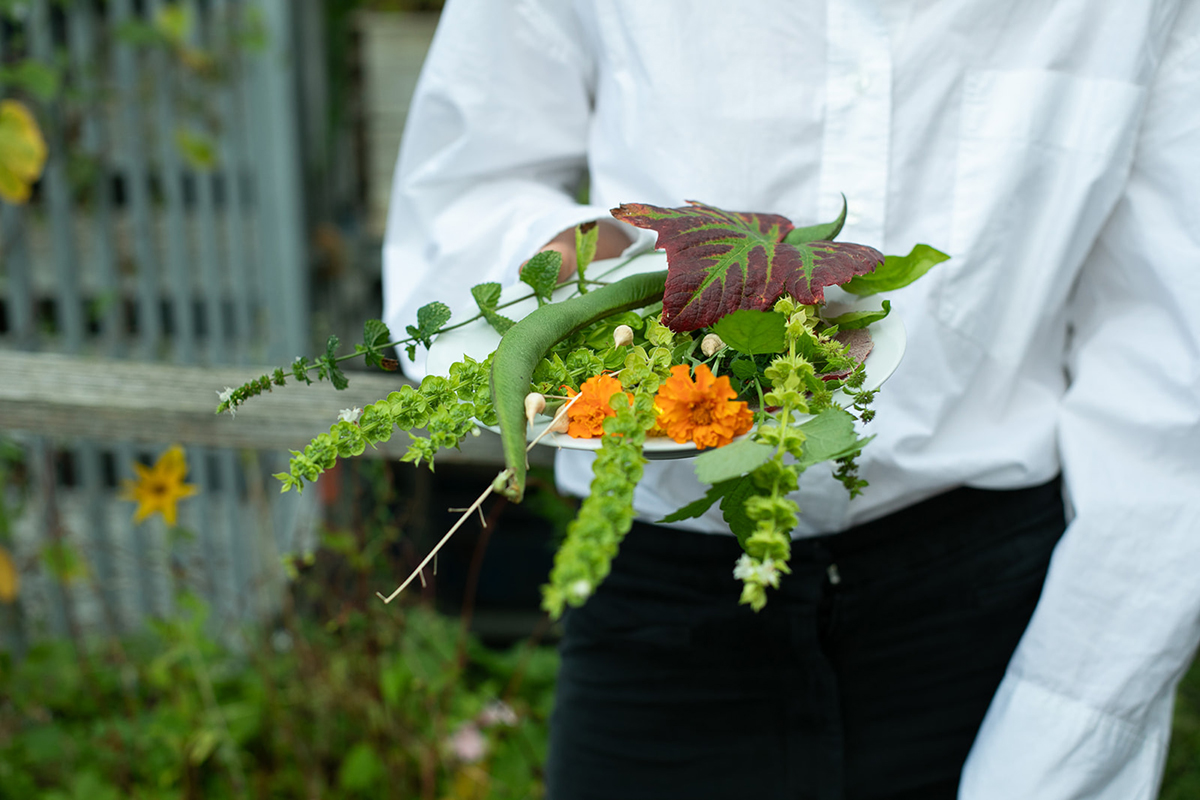
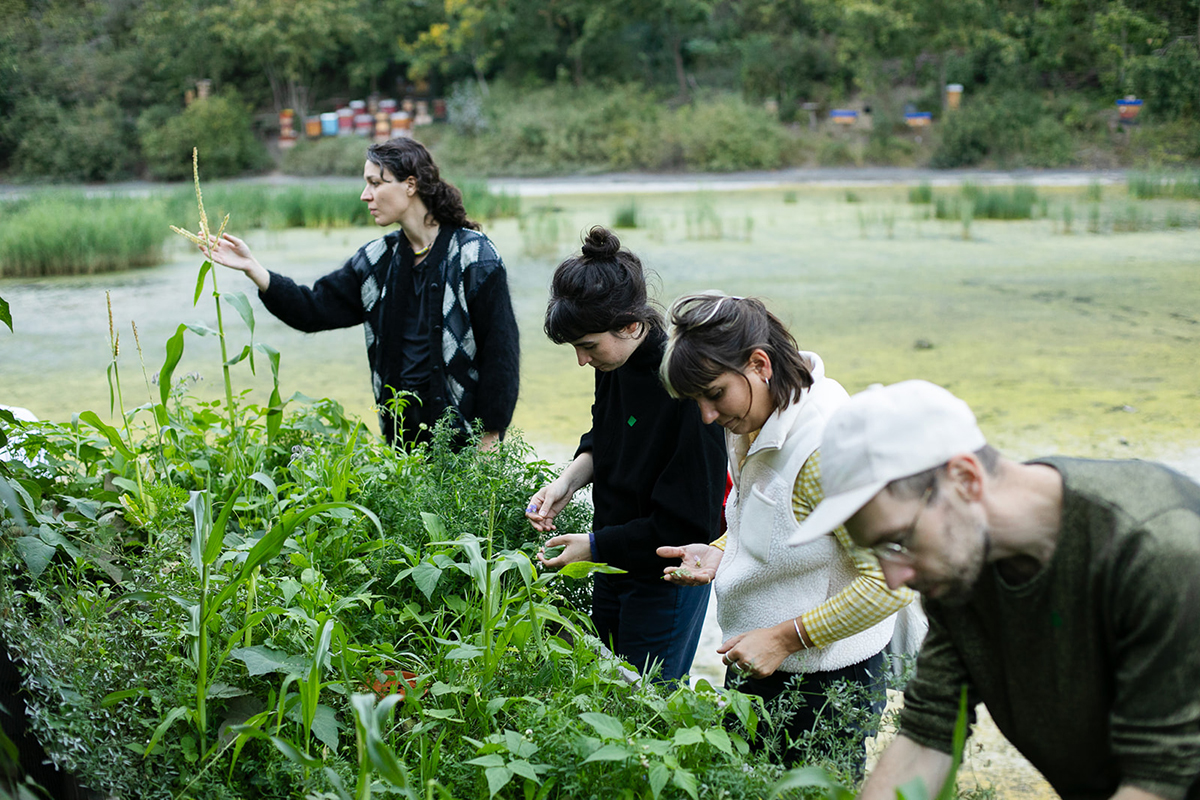
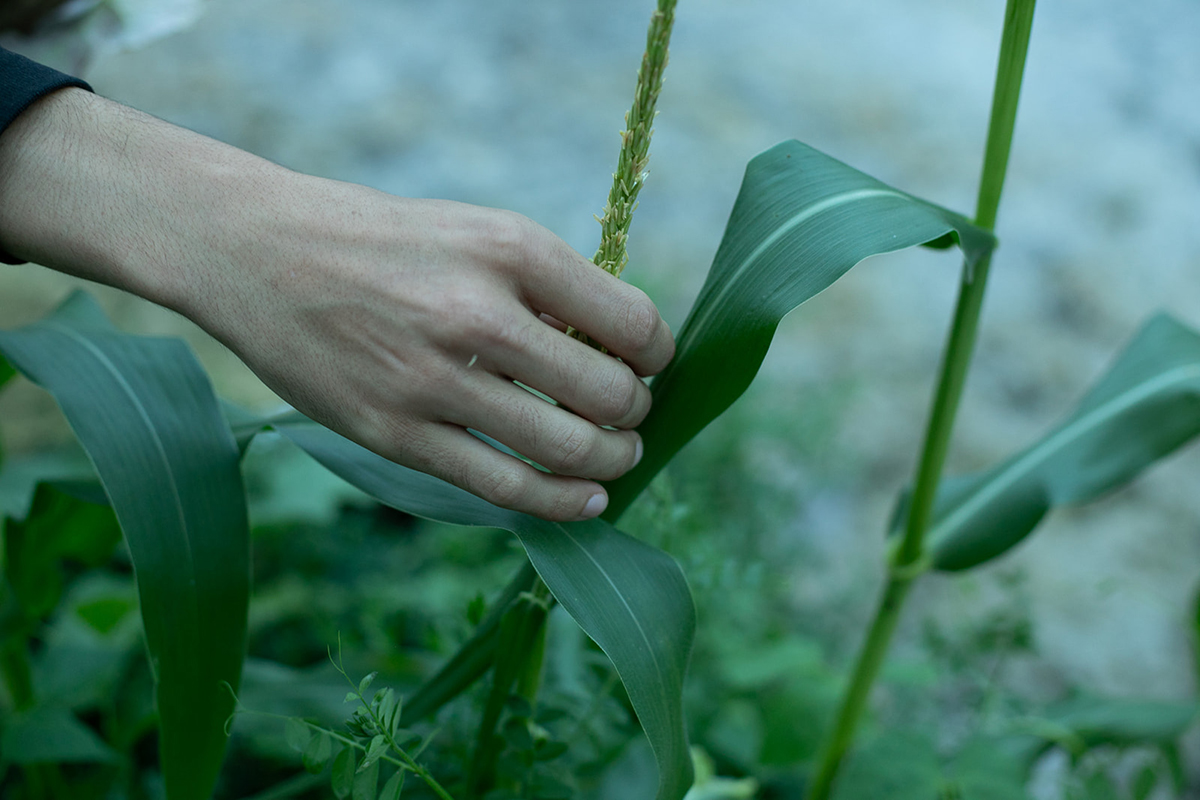
Early spring 2023, a milpa was installed at Floating University. We planted corn, squash and beans around the kitchen in an attempt to test the traditional Mesoamerican polyculture of corn (Zea mays L.), bean (Phaseolus spp.) and squash (Cucurbita spp.). The term “milpa” comes from the Nahuatl language (“milli,” sown field, and “pan,” on top of). Also known as the “three sisters”, the Mesoamerican agro-ecological unit embodies ideas of hybridity, reciprocity and interdependence. It is a pre-colonial subsistence system that not only offers an alternative to eurocentric monocultures, but introduces a cultural contrast: milpa as a divergent worldview, diverse, plural, interconnected in difference.
The milpa at Floating is an experiment. Growing a garden in a rainwater retention basin with a special microclimate that is affected by flash rains, contrasting humidity and extreme heat due to the concrete floor is a climate change exercise.
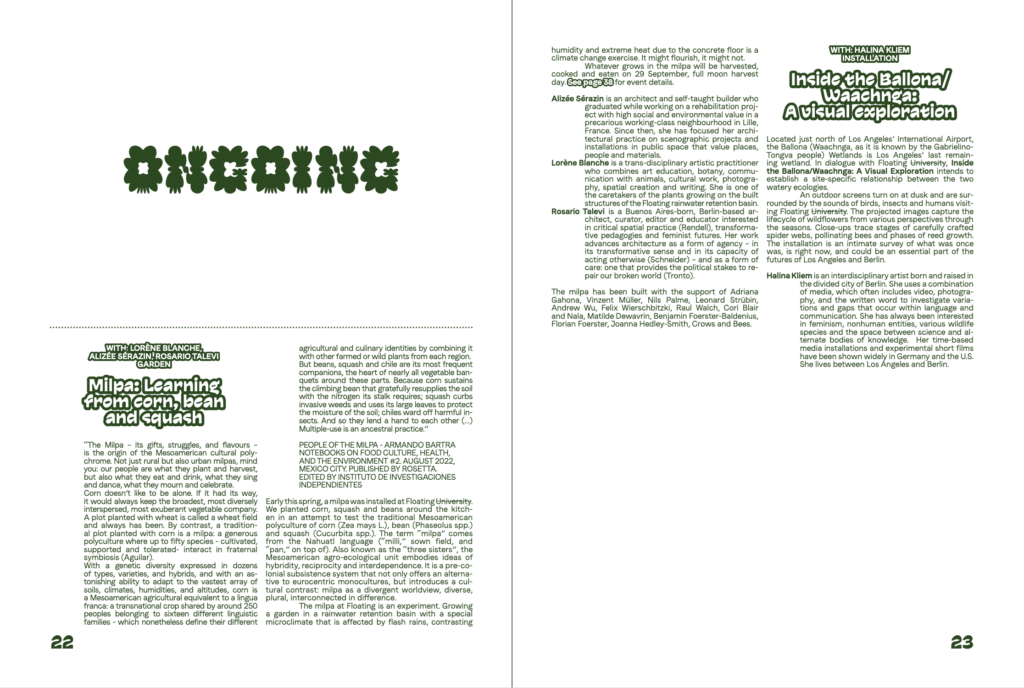
Volunteers: It has been built with the support of Vinzent Müller, Nils Palme, Leonard Strübin, Andrew Wu, Felix Wierschbitzki, Raul Walch, Cori Blair and Nala, Matilde Dewavrin, Benjamin Foerster-Baldenius, Florian Foerster, Joanna Hedley-Smith, Lorene Blanche, and taken care of with the support of Adriana Gahona, Bees and Crows.

