BiberAmt
Agency for a Beavered Berlin
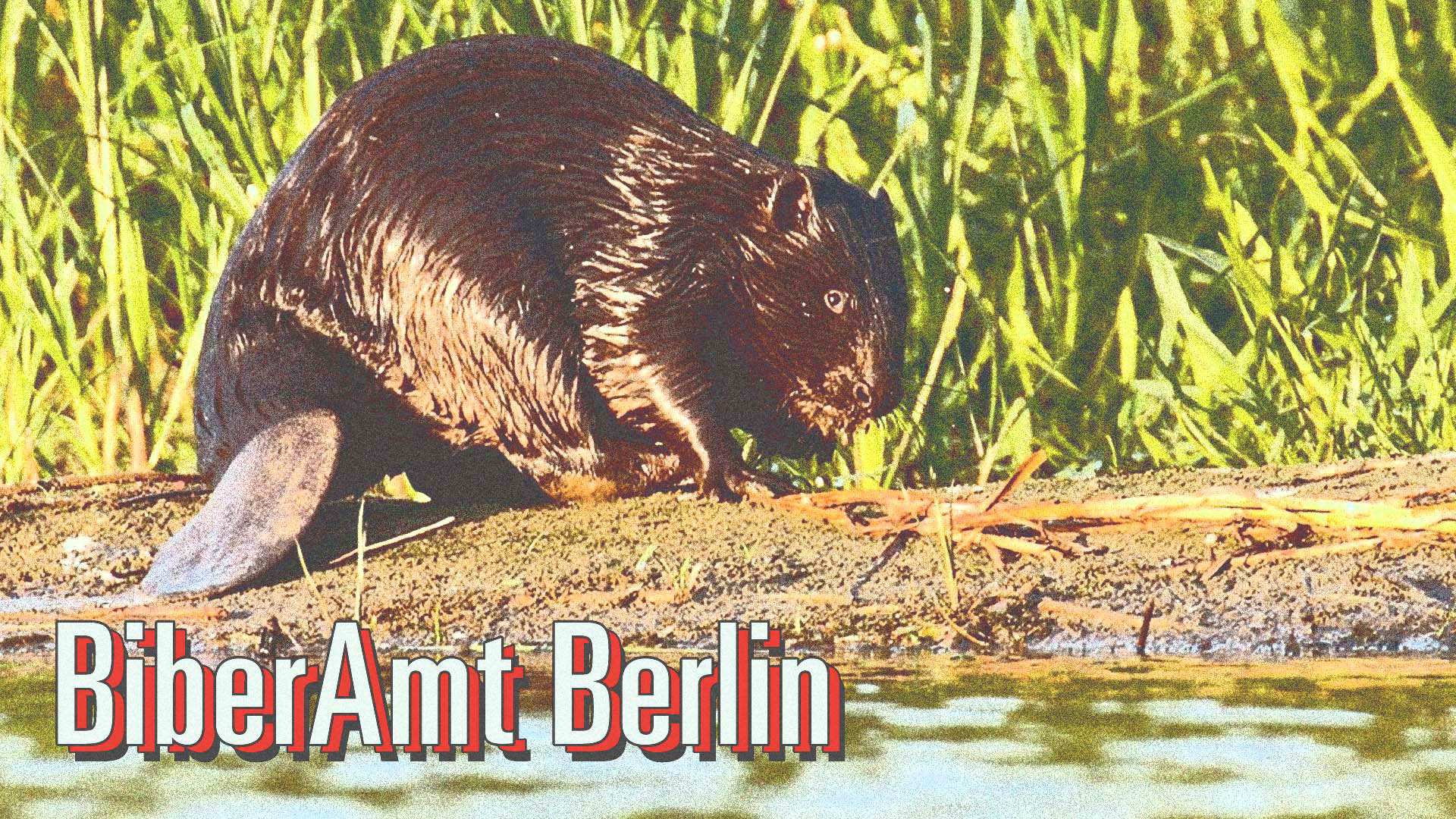
What happens when a city becomes wetter, wilder, and increasingly shaped by other species? BiberAmt is a speculative public office exploring what it means to live in Berlin when water is retained, wetlands expand, and beavers are part of everyday life.
Visitors are invited to visit the office and become temporary staff members to work on ongoing administrative cases related to flooded pathways, gnawed trees, and other situations emerging from a changing urban landscape. Enter the BiberAmt and review files, annotate maps, discuss responses, or simply observe and have a coffee.
BiberAmt will convene a series of public agency sessions – The Wet, The Wild, and The Weird – where visitors, researchers, practitioners, and artists come together to explore particular questions emerging from the agency’s ongoing work.
Part workplace, part art installation, part pedagogical experiment and part public interface, BiberAmt invites visitors to step inside an institution learning to live with more water, more wildlife, and greater ecological complexity.
At the heart of the project is a simple idea: many environmental conditions cannot be fully controlled, optimised, or resolved. Instead, they must be observed, interpreted, negotiated, and managed over time. BiberAmt’s purpose is therefore not to solve problems, but to explore what it might mean to sustain coexistence under conditions of partial control.
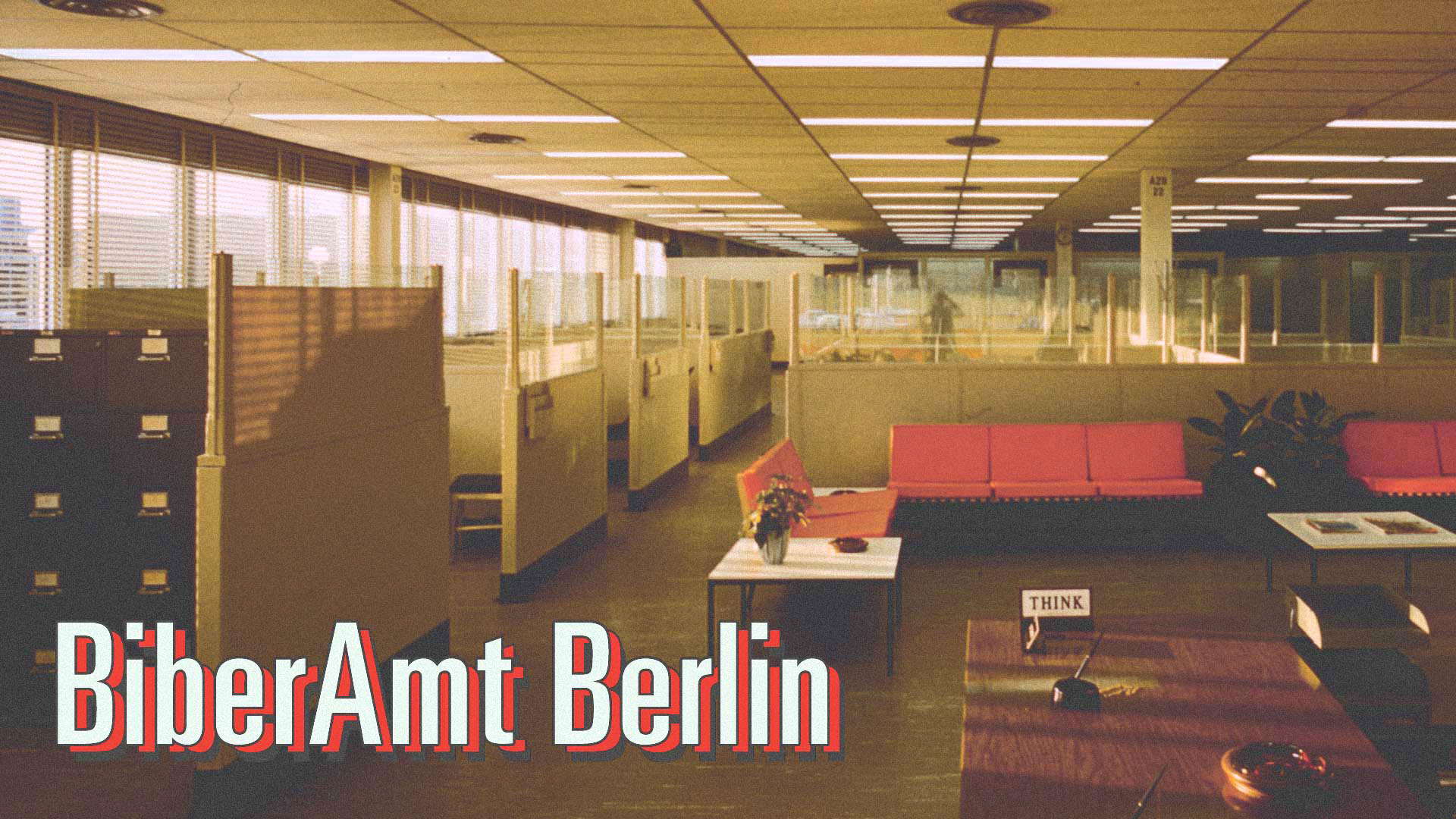
The office work draws on conversations with researchers, public authorities, and practitioners working on beavers, urban ecology, water retention, and Berlin’s Sponge City transition. They form a collection of cases which highlight not only what is possible in the future, but what is already happening on the ground. Rather than anticipating adaptation and mitigation, it becomes clear that Berlin has and continues to change, albeit in a non-linear and ambiguous fashion.
By creating a space where beaver and human methods and logics of water retention are held together, BiberAmt asks how cities can adapt not only through human-built plans and infrastructure, but through new forms of care, responsibility, maintenance, and coexistence.
The project is developed by Johannes Stripple and Pauline Münch in collaboration with Floating University Berlin and the design studio Feral Malmö, as part of the Horizon Europe-funded NATURESCAPES project.
Opening Hours
6th–20th August 2026
Wed -Sat 16:00 – 20:00
Sundays 14:00 – 18:00
Come in as a temporary member of staff. Review case files. Sort correspondence. Weigh in on flooded pathways, gnawed trees, habitat conflicts, and unclear responsibilities — or just stop by for a coffee
Public Programming
Opening: Thursday August 6th 16:00 – 20:00
BiberAmt opens its doors and invites visitors to come in, take a look at case files on the desk, and consider what it means to work in a changing city.
18:00 Pizza from Tischlein Deck Dich
Bar open
The Weird & Pub Quiz: Thu Aug 13th 17:30 – 20:00
17:30-18:30 Zine Workshop Tracing the pasts, presents, and futures of Berlin’s beaver history, the agency will create a collective zine — asking what happens when the city’s borders are drawn not only by geography and politics, but by unruly ecologies as well.
19:00 – 20:00 ‘That Dam Pub Quiz’
The Wet: Friday 14th Aug 12:00 – 17:00 (*Biber Amt holds regular office hours 16:00-20:00)The agency turns attention to water: what retention, flooding, and saturation actually look and feel like for a Sponge City.
12:00 – 14:00 Wuhle-Walkshop Join an explorative walk tracing Berlin’s water retention and beaver activity on the river Wuhle.
Meeting point: Wuhle Café (at Wuhletal S-Bahn Station) Location on Google Maps
The walk will cover 3 km.
16:00-17:00 Back at the floating university in the BiberAmt, we take time to reflect on our fieldwork, processing, filing, and sorting our experiences. Bar open for refreshments. All participants are welcome!
The Wild: Sun Aug 16th 17:00 – 21:30
Through artistic interventions, the workshop asks what it means to share urban space with trees, beavers and other species reshaping Berlin?
17:00–19:00 — A Soft Map of the Floating Trees Workshop with Cleo Wächter
Gently bending tools of bureaucracy into means for noticing, tracing, and connecting, this session will explore the relationships between trees, water and sensemaking. Chipping away beyond quantitative categories, we will create a collective soft cartography of floating trees for BiberAmt’s Archives.
20:00–21:00 — Beavers in Paradise
Open-air film screening
Followed by Q & A with Jonny Turnbull and Dr. Dr Sean McCormack (Elan Beaver Project).
The film follows the Ealing Beaver Project, London’s first fully accessible urban beaver reintroduction site, dedicated to bringing people closer to nature.
Closing: Thursday August 20th 18:00 – 21:30
An institution closes its doors. Part office, part installation, part something harder to name. Step inside and see what is next. The program will include multispecies soundscape, and performance.
This project is funded by the European Union under Grant Agreement No 101084341. Views and opinions expressed are however those of the author(s) only and do not necessarily reflect those of the European Union. Neither the European Union nor the granting authority can be held responsible for them.