Hidden Threads
(Hi)Stories from Tempelhofer Feld and Textile Activism
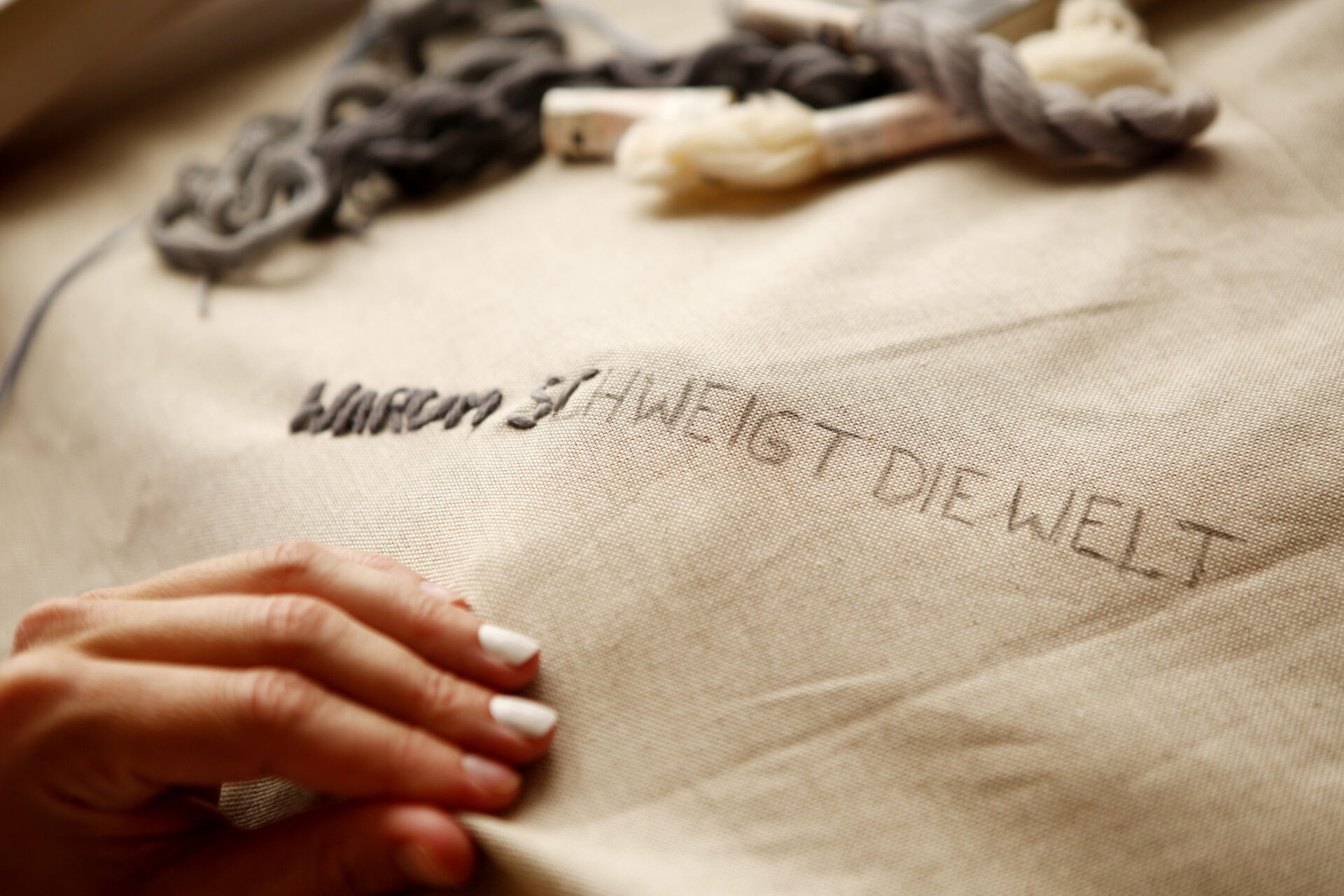
Hidden Threads Open Workshop | (c) Constanze Flamme
The ‘Hidden Threads’ project focuses on a largely forgotten chapter in Berlin’s history: the Columbia concentration camp and the large camps for forced labourers on what is now Tempelhofer Feld. Destruction, the site’s use as an airport, and the ongoing debate over its development have erased historical traces and prevented collective remembrance.
The project sees this void as a historical and social mission. In a participatory process, we link research about idividual fates with collective memory and artistic expression. From Autumn 2025 we invite neighbours and initiatives to share objects, stories and images relating to Tempelhofer Feld. In spring 2026 we bring togetheer artists from the Thikwa workshops, Ukrainian families from the GU Columbiadamm and the artists from Kollektiv Sticken and initial textile works are being created that respond to the research. In addition, textile traditions and craft techniques from different contexts are incorporated into the work.
In further open workshops at the Floating Campus, stories and textile techniques are shared and individual collages are created.
Finally, the works are displayed and presented at Tempelhofer Feld in September 2026. They remain anchored in Floating University as a permanent installation – as a space for remembrance, listening and asking further questions in solidarity.
Next Open Workshop:
Thursday, September 10 | 4 – 7 pm
Floating University
Project Presentation:
Friday, September 11 | 2 – 4 pm
Floating University and Tempelhofer Feld
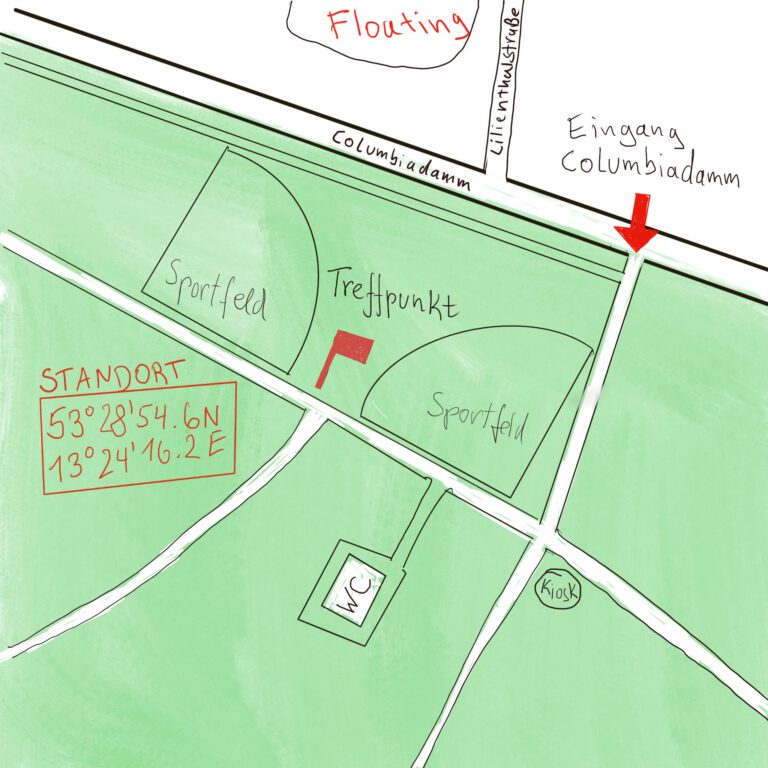
Here you can find an introduction in Ukrainian, recorded by Yevheniia Perutska:
Запрошення до участі та опис проєкту українською Ви можете знайти тут:
Here you find the introduction as text for Download in Ukrainian, English and German.
Українська Introduction English Einleitung Deutsch
Phase 1: Search for Traces
Hidden Threads of Forced Labour and the KZ Columbia in the neighbourhood
Tour with the Thikwa Artists to Tempelhofer Feld and in the basement of Bockbrauerei
On our way to the former site of the Columbia concentration camp, we passed Police Precinct 5. The buildings and grounds once belonged to the Queen Augusta Guard Grenadier Regiment. The regiment also included a military prison, which, at the beginning of the Nazis’ reign of terror, was used to imprison and intimidate political opponents through the use of various brutal methods of torture. The prison was opened in 1934 under SS supervision as the Columbia Concentration Camp, and by the time it closed in 1936, more than 1,000 men had been imprisoned there. The building was demolished to make way for the new airport and was forgotten over the decades. Today, two works of art serve as reminders of this place of horror. A sculpture by Georg Seibert, made of patinated stainless steel and shaped like a house, recreates the cramped cells. Closer to the actual site of the concentration camp, the memorial by Martin Bennis and Weidler Händle Atelier takes the form of the phrase “NICHT MEHR ZU SEHEN (No longer visible),” formed with bricks. With this, the architect also addresses how the Columbia Concentration Camp – which was shrouded in silence for years – has been dealt with.
Back at the Bockbrauerei on Fidicinstraße, we had the opportunity to visit the brewery’s cellar – thanks to the housing cooperative “Am Ostseeplatz eG”. In 1944, the vaulted cellar was covered with a 2-meter-thick concrete ceiling to protect it from air raids. In November, Telefunken AG moved into the premises from Wedding and set up a production facility for electron tubes, which were used in radio equipment and control systems for rockets. Up to 500 people worked in the cellars on a shift system, including many forced laborers from the occupied territories of the former Soviet Union.
As part of a new construction project, the vaulted cellar was slated to make way for a parking garage. The citizens’ initiative WEM GEHÖRT KREUZBERG informed the public about the demolition plans and, together with the state monument preservation authority, succeeded in having the cellars designated as a protected site in 2017.
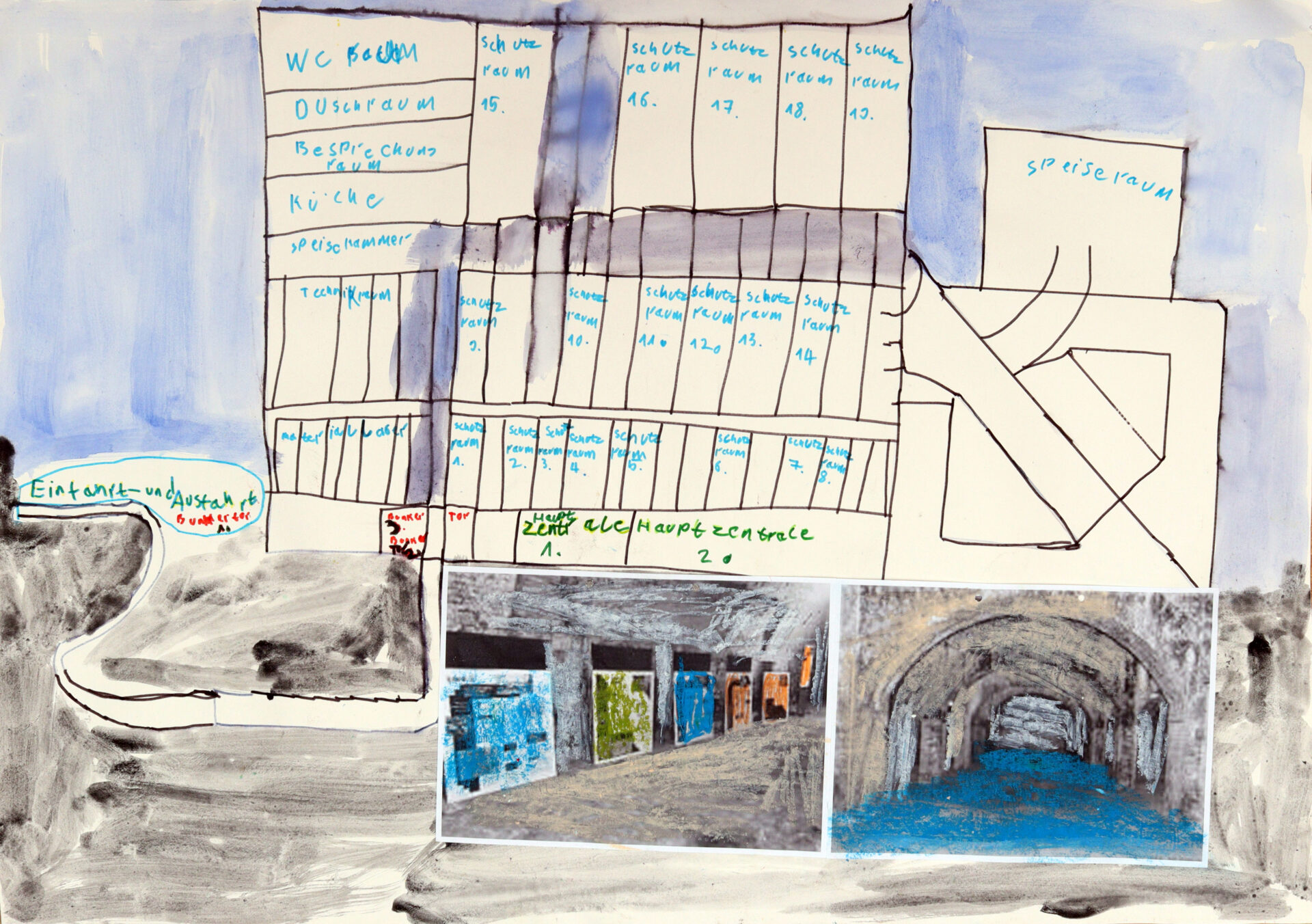
Basement of the former Bockbrauerei | (c) Vincent Martinez
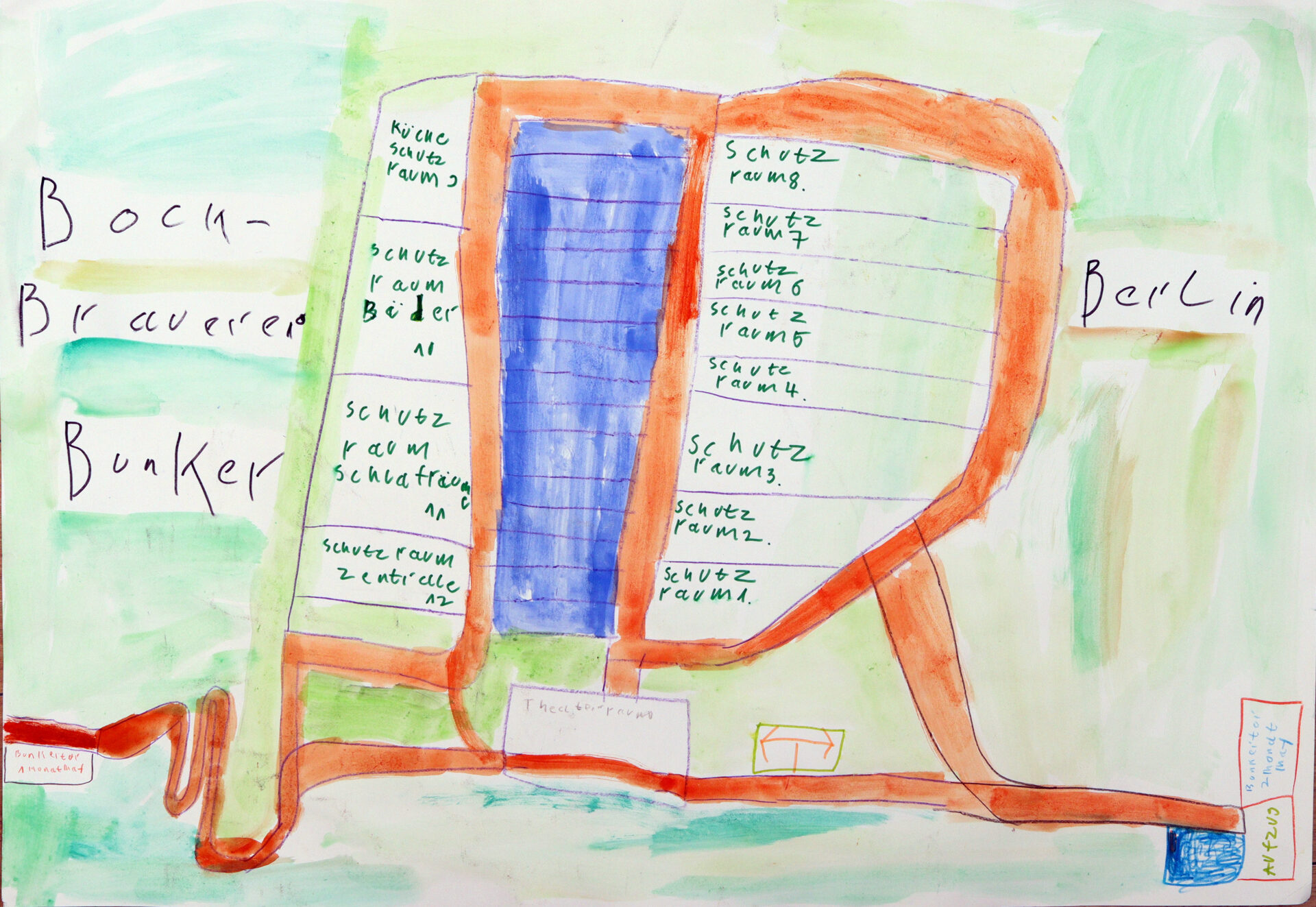
Basement of the former Bockbrauerei | (c) Vincent Martinez
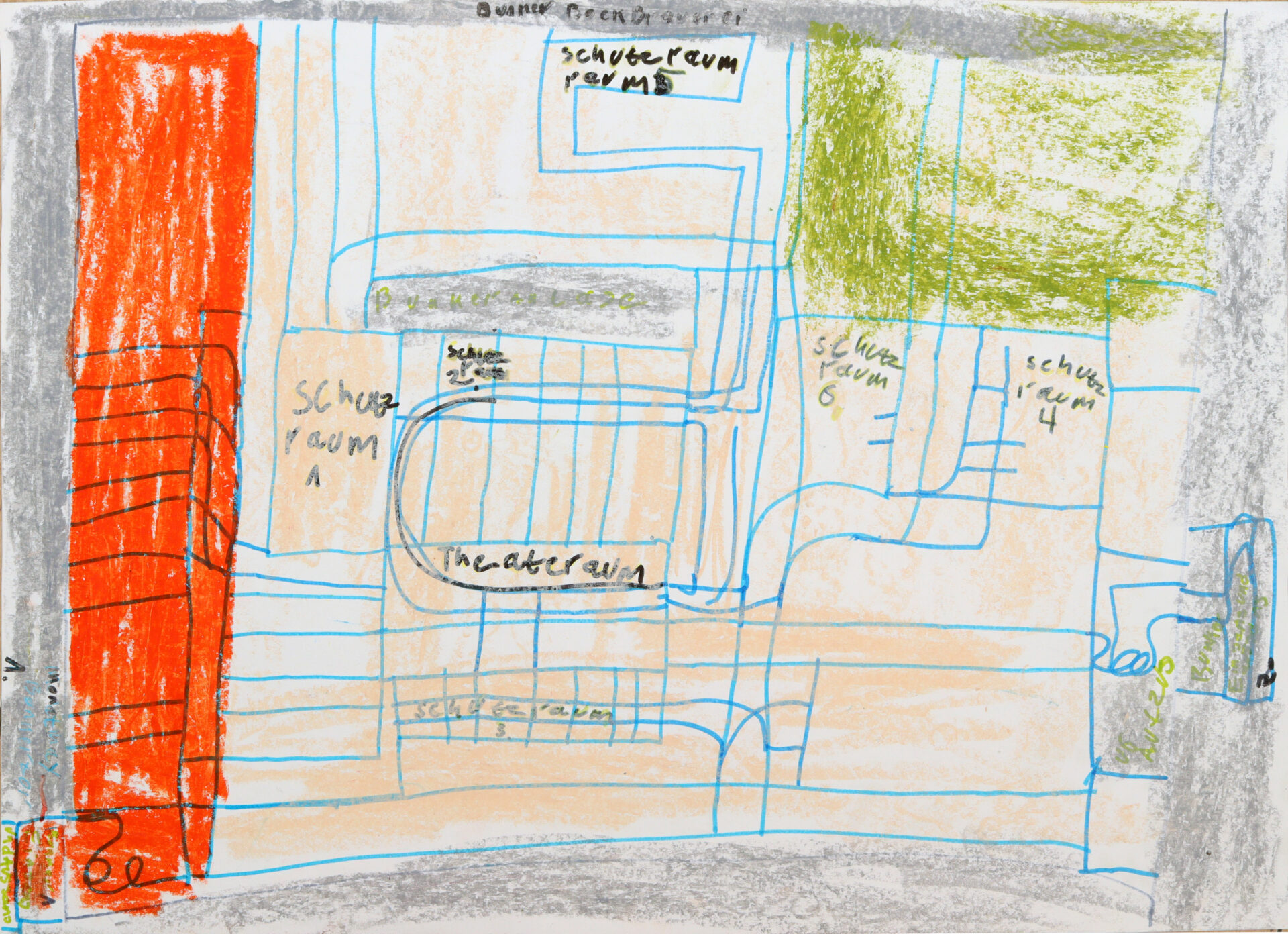
Basement of the former Bockbrauerei | (c) Vincent Martinez
The tour to the basement inspired artist Vincent Martinez to create a series of overpaintings, which we are exhibiting here. Martinez has long been exploring the theme of shelters and warning systems in Berlin, and in light of the current growing threat, he is questioning the concept of protection.
Phase 2: Sharing and Discussing
Forced Labour and the KZ Columbia through collective practice of embroidery
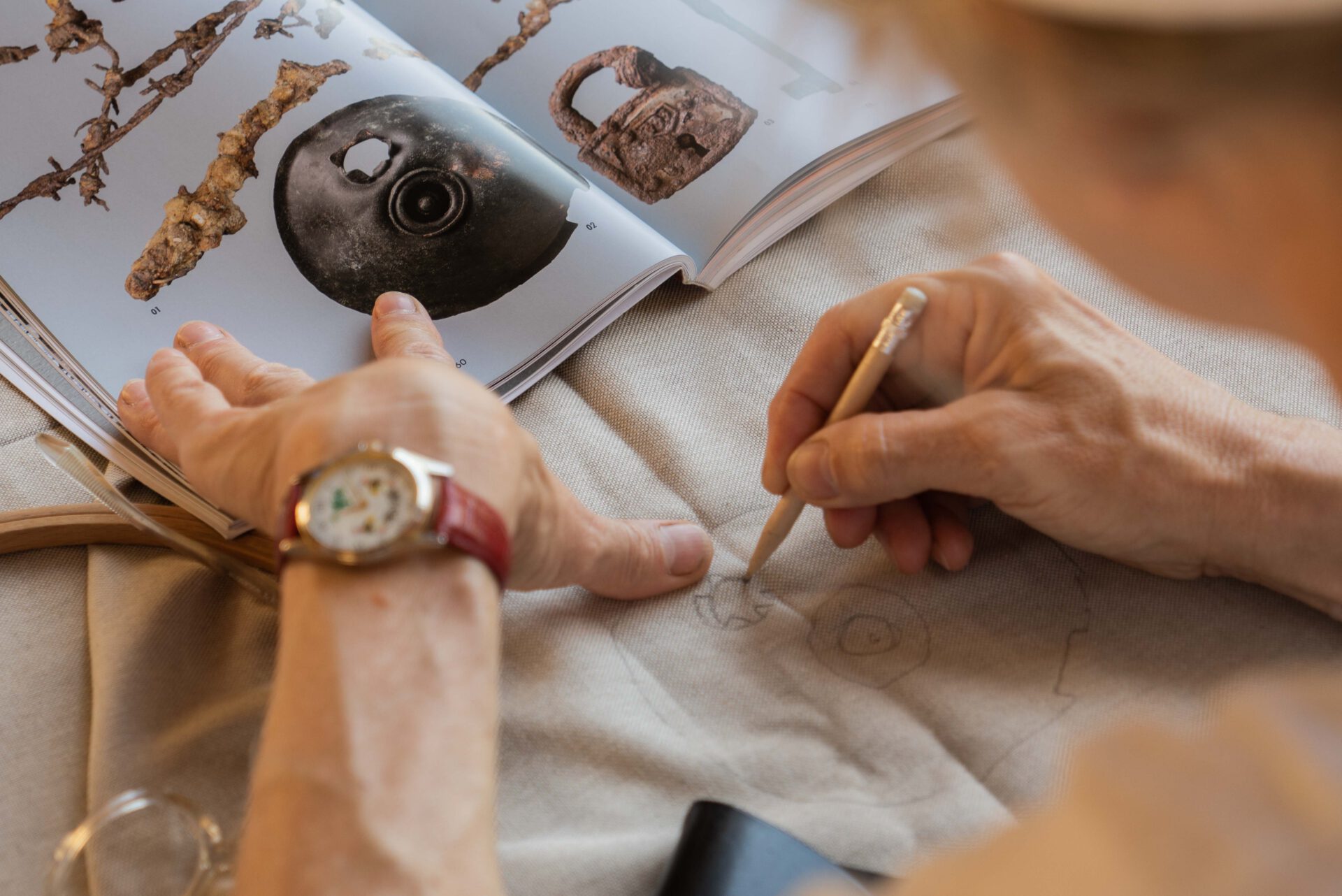
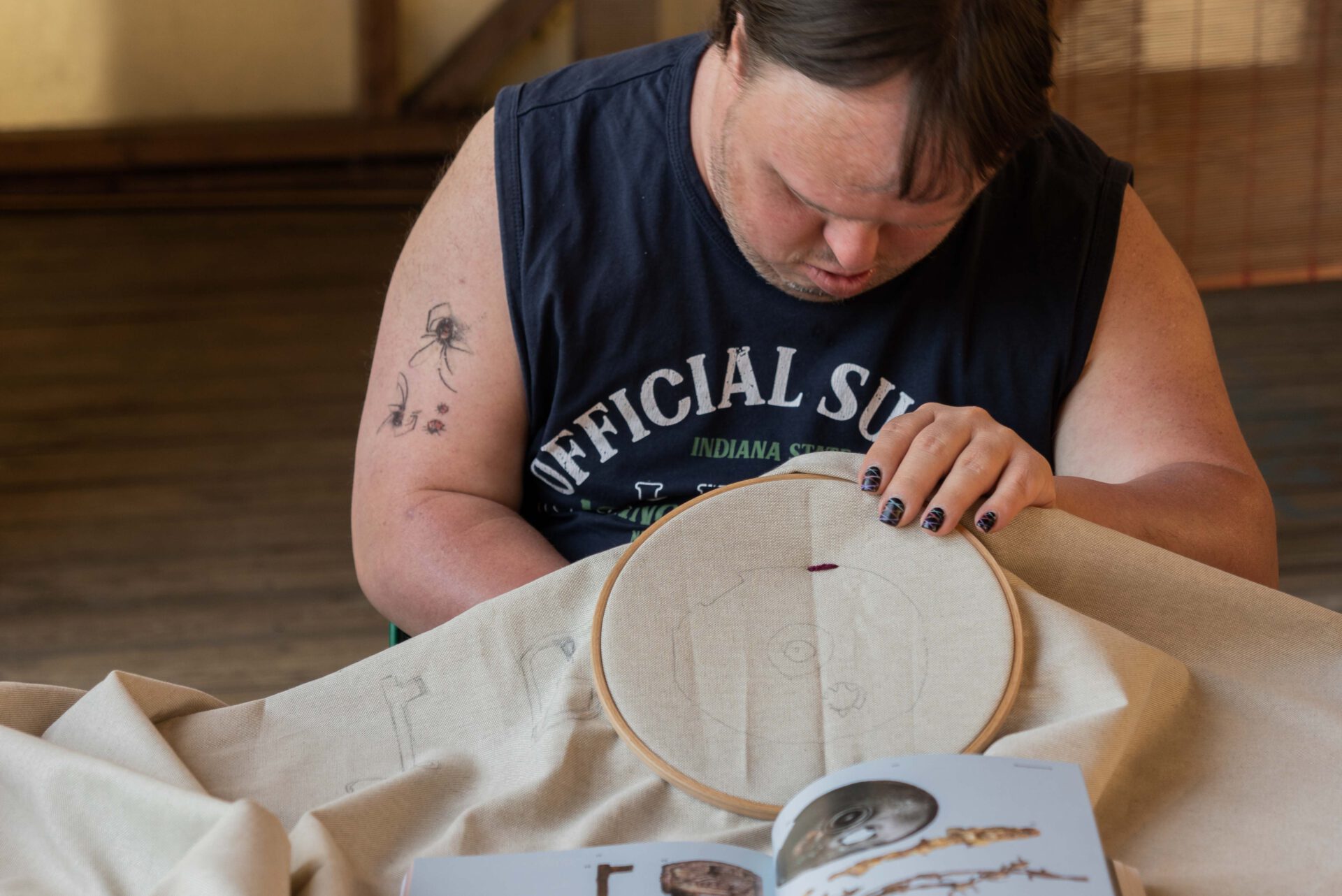
… with Artists from Thikwa Workshop for Theatre and Art
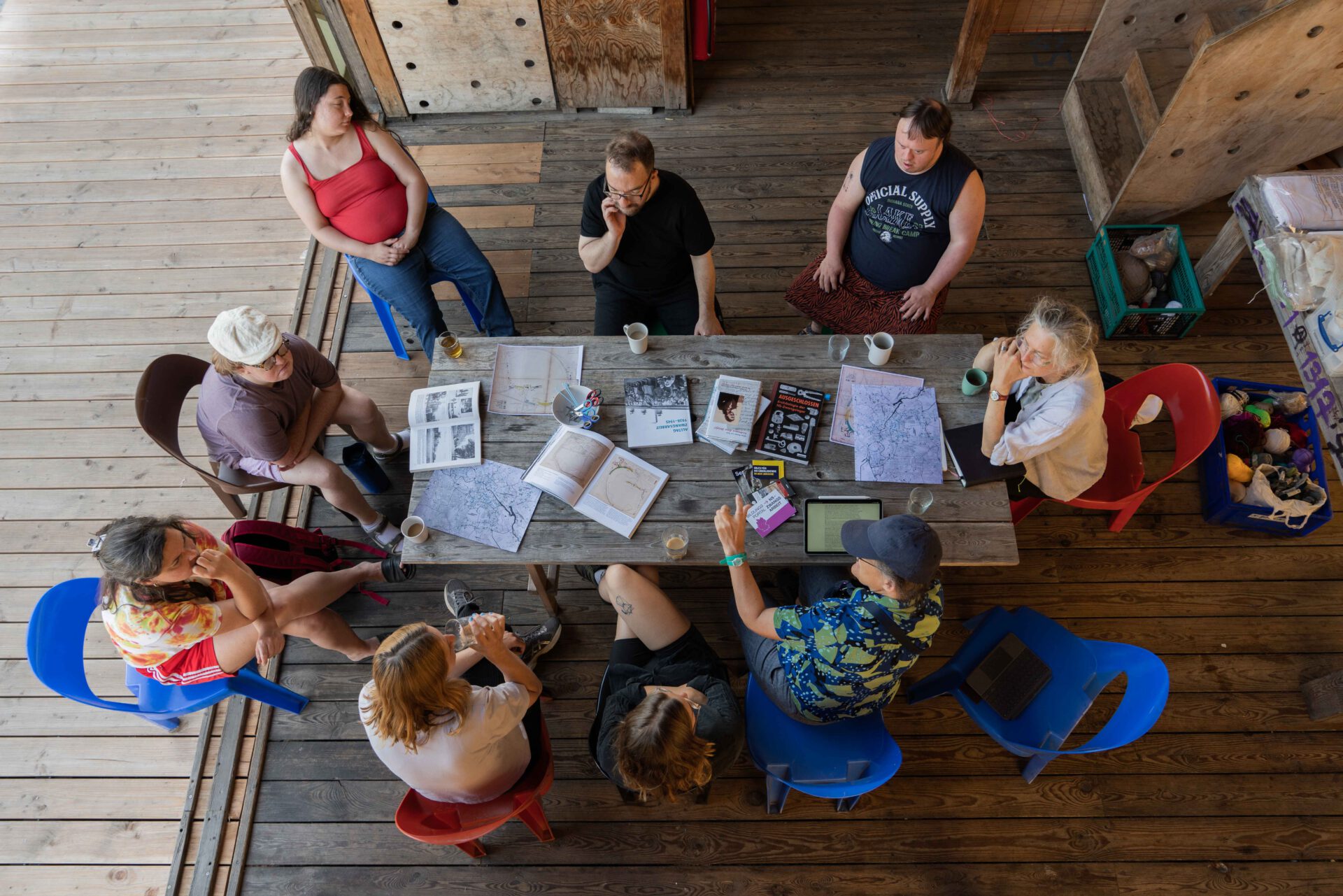
Hidden Threads Thikwa Workshop | (c) Sebastian Díaz de León
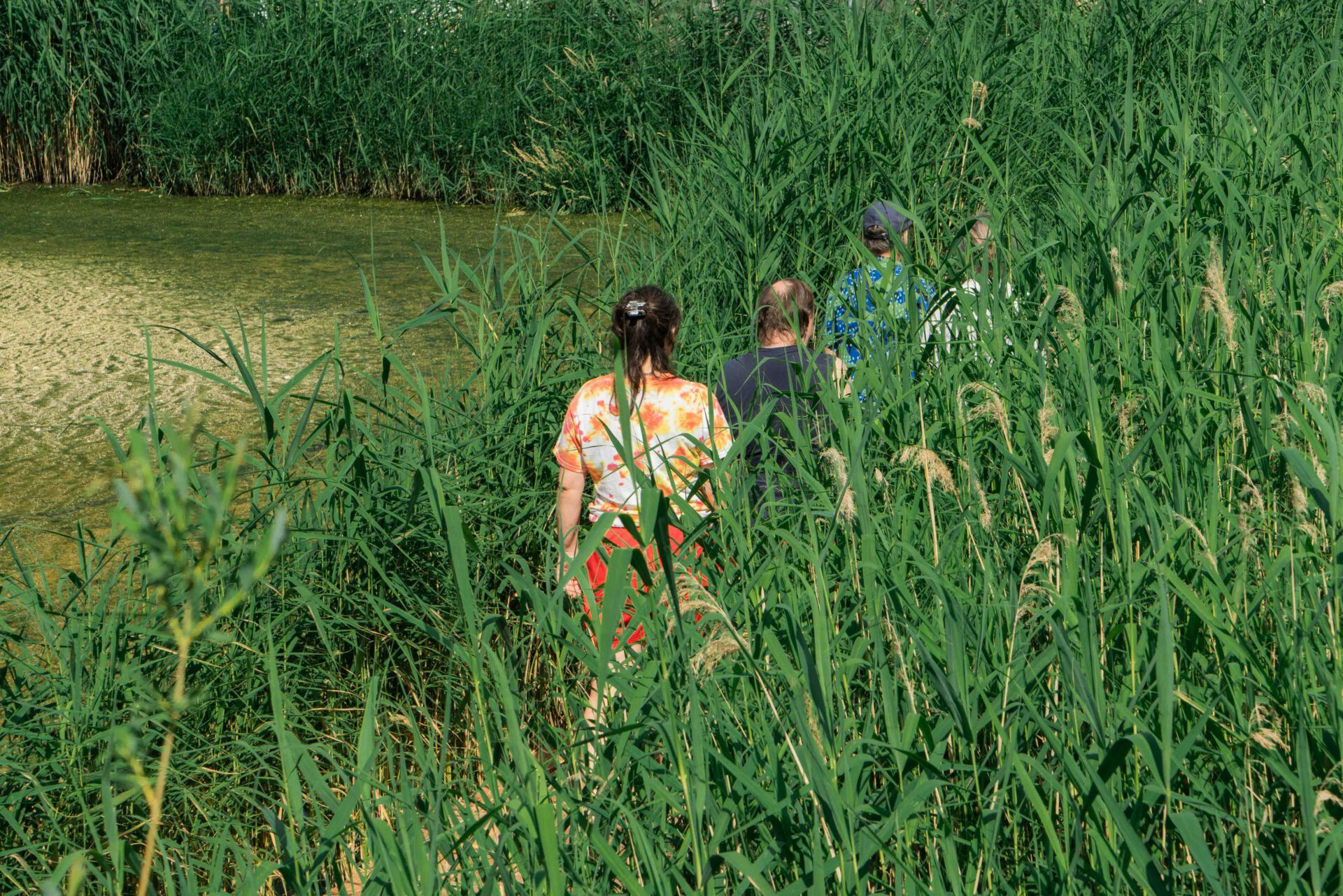
Hidden Threads Thikwa Workshop | (c) Sebastian Díaz de León
Hidden Threads Thikwa Workshop | (c) Sebastian Díaz de León
Hidden Threads Thikwa Workshop | (c) Sebastian Díaz de León
…in open Workshops
Hidden Threads Open Workshop | (c) Constanze Flamme
Hidden Threads Open Workshop | (c) Constanze Flamme
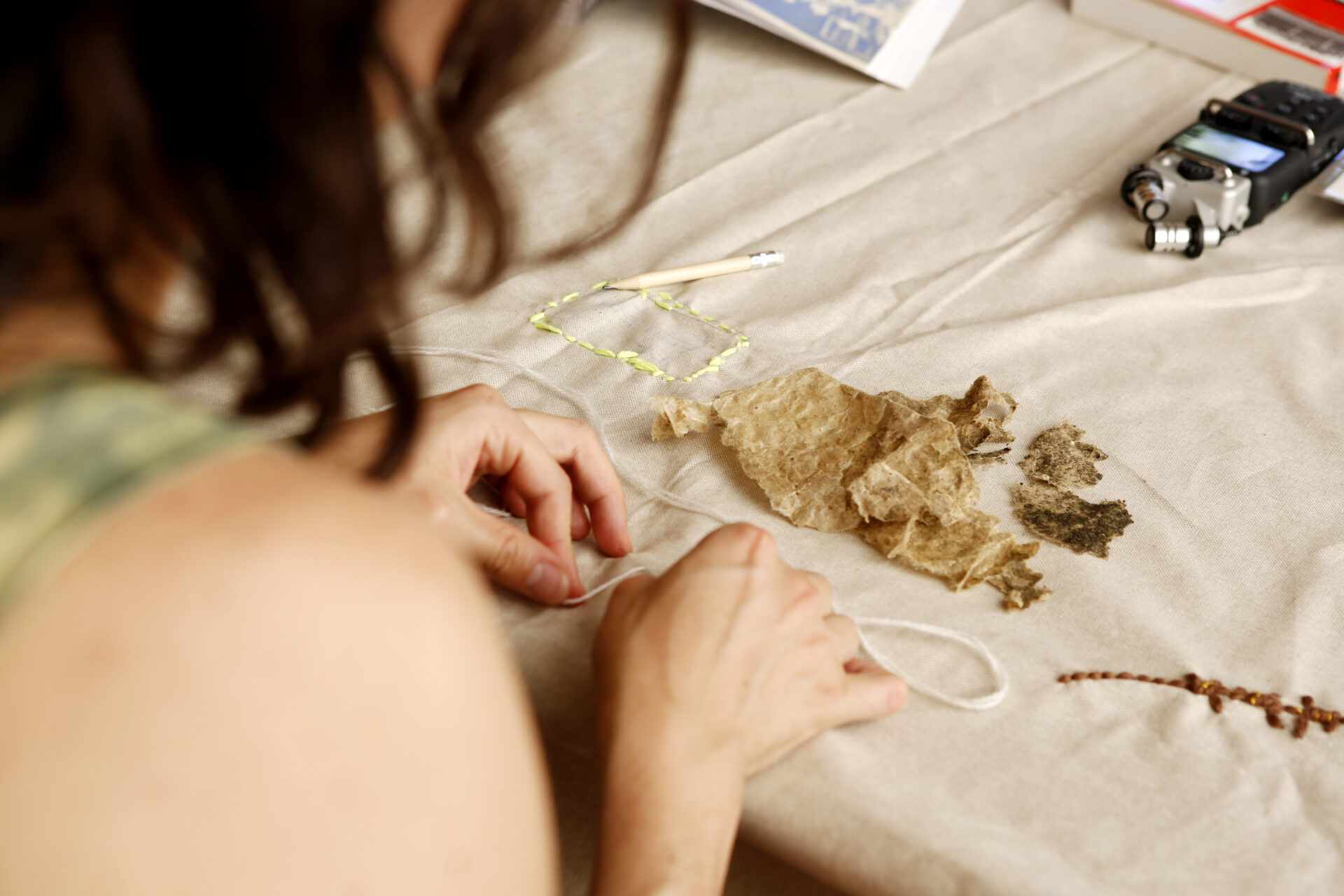
Hidden Threads Open Workshop | (c) Constanze Flamme
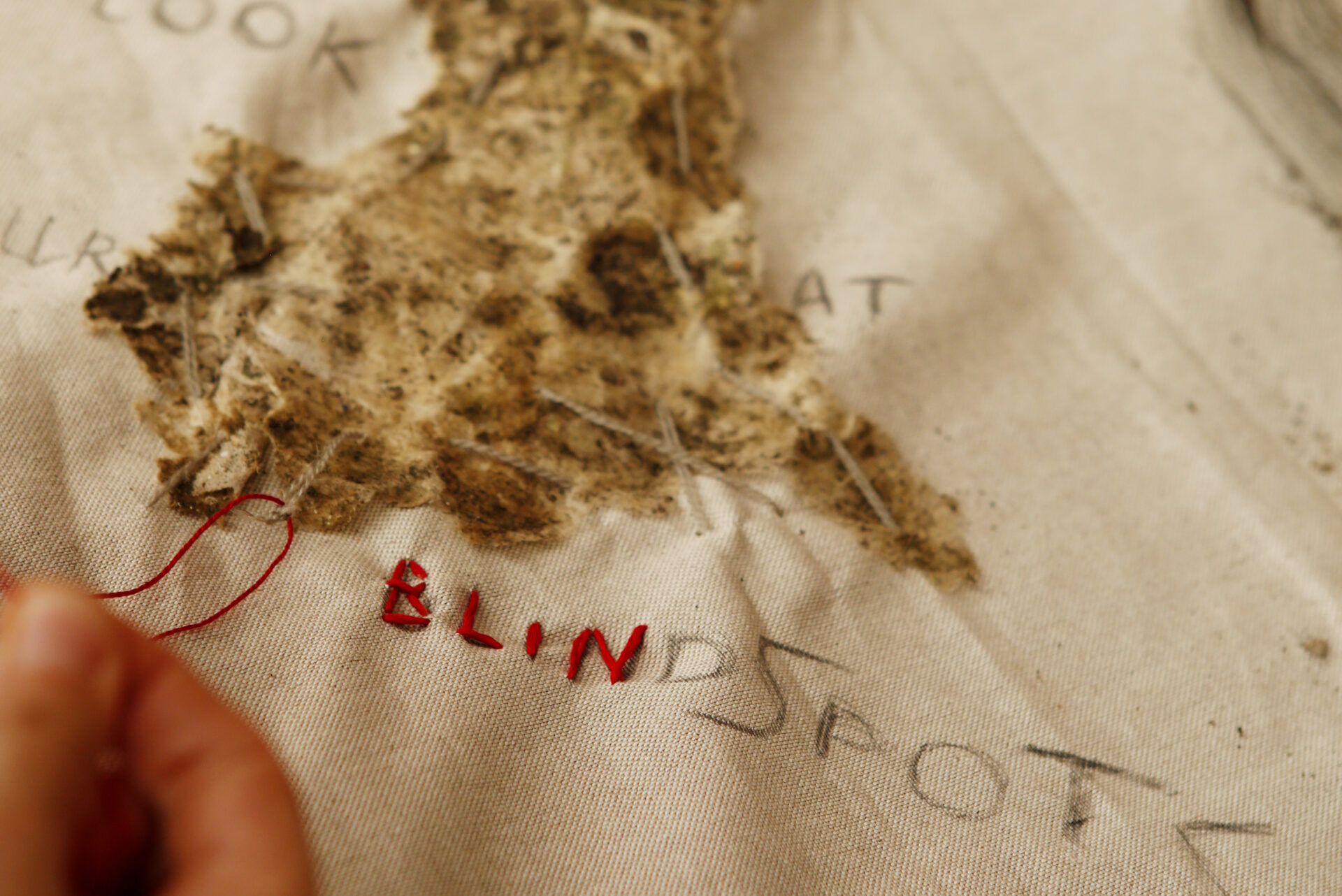
Hidden Threads Open Workshop | (c) Constanze Flamme
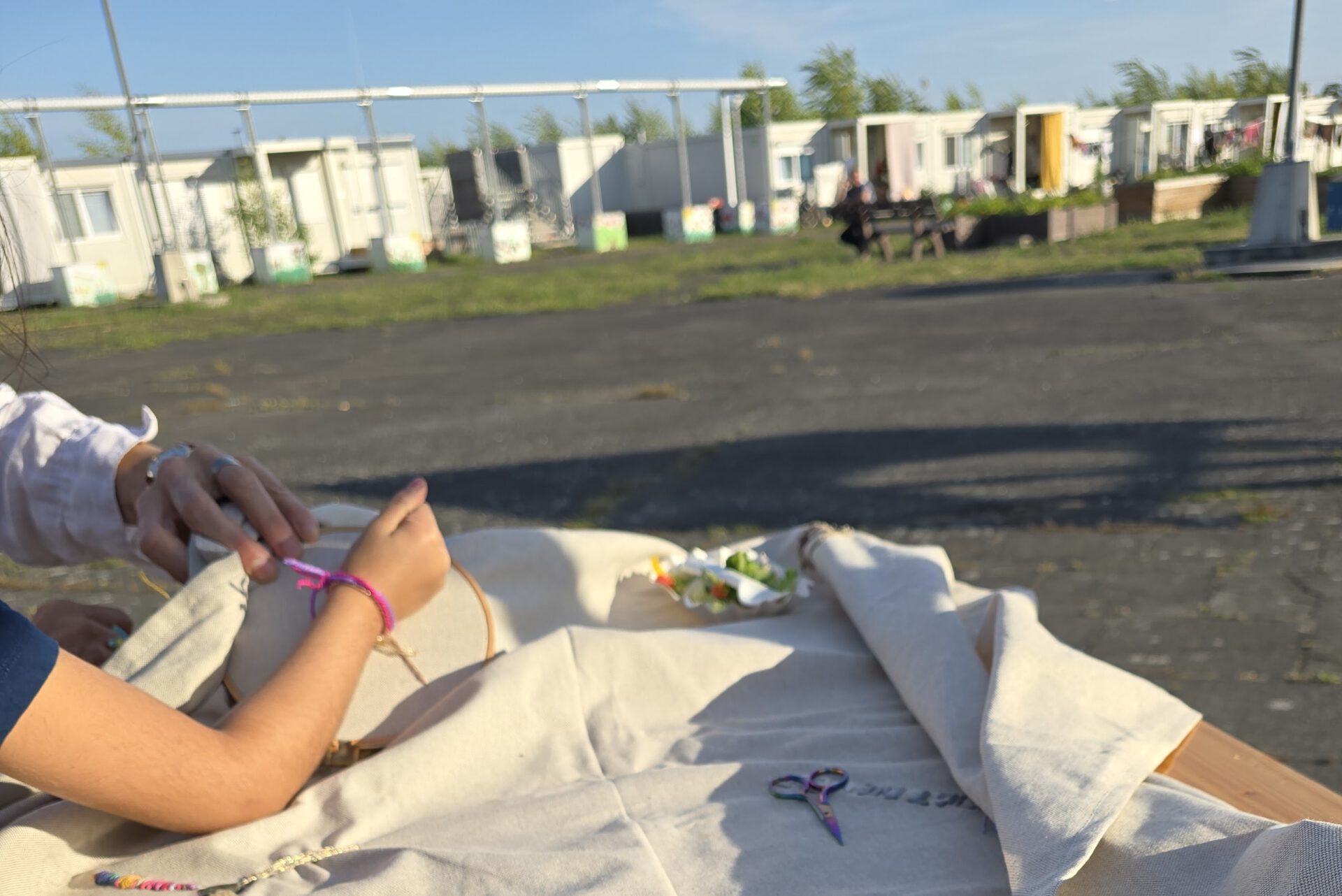
…in the Refugeecamp on Tempelhofer Feld
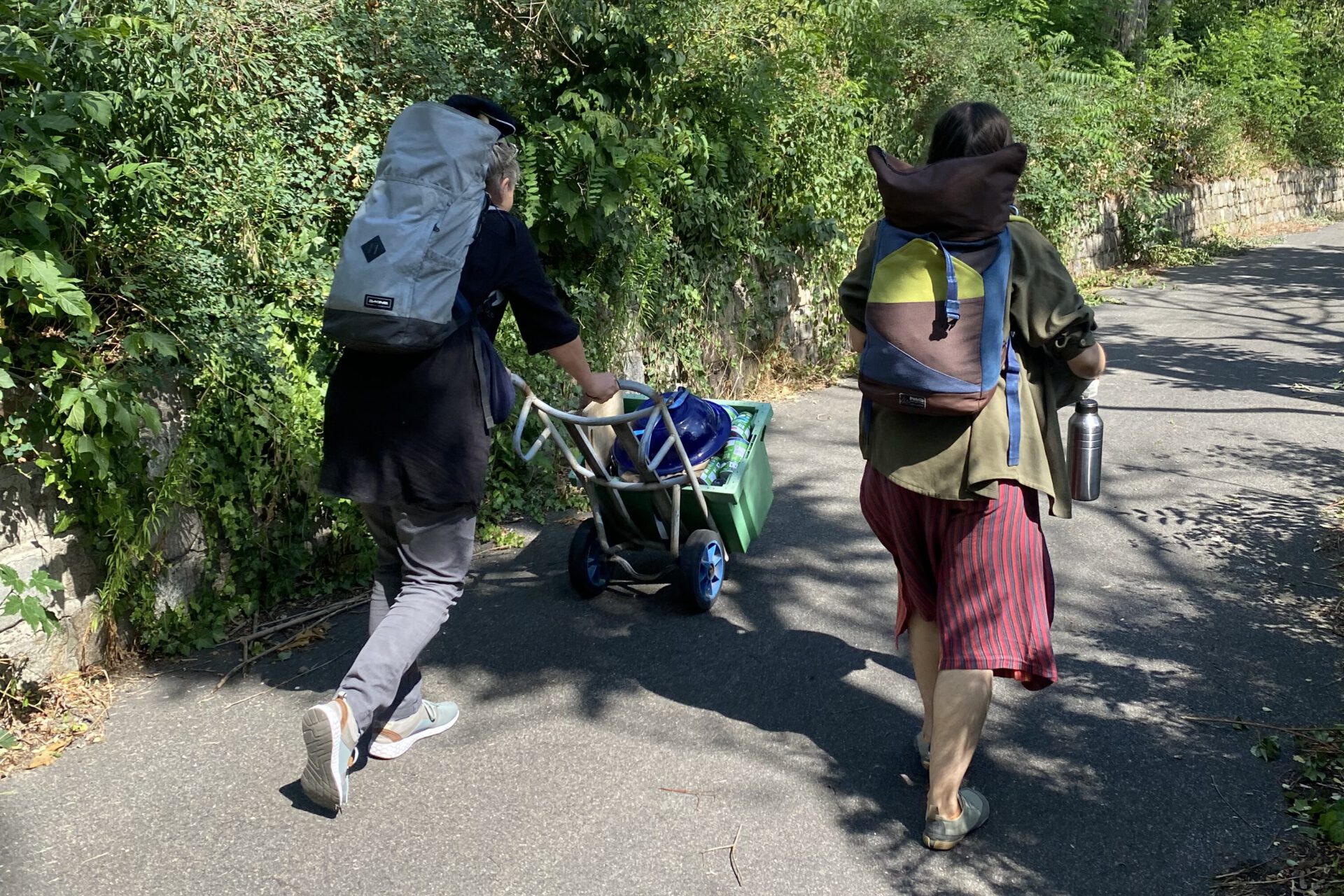
Hidden Threads GU Columbiadamm Workshop | (c) Silja Teresa Huppertz
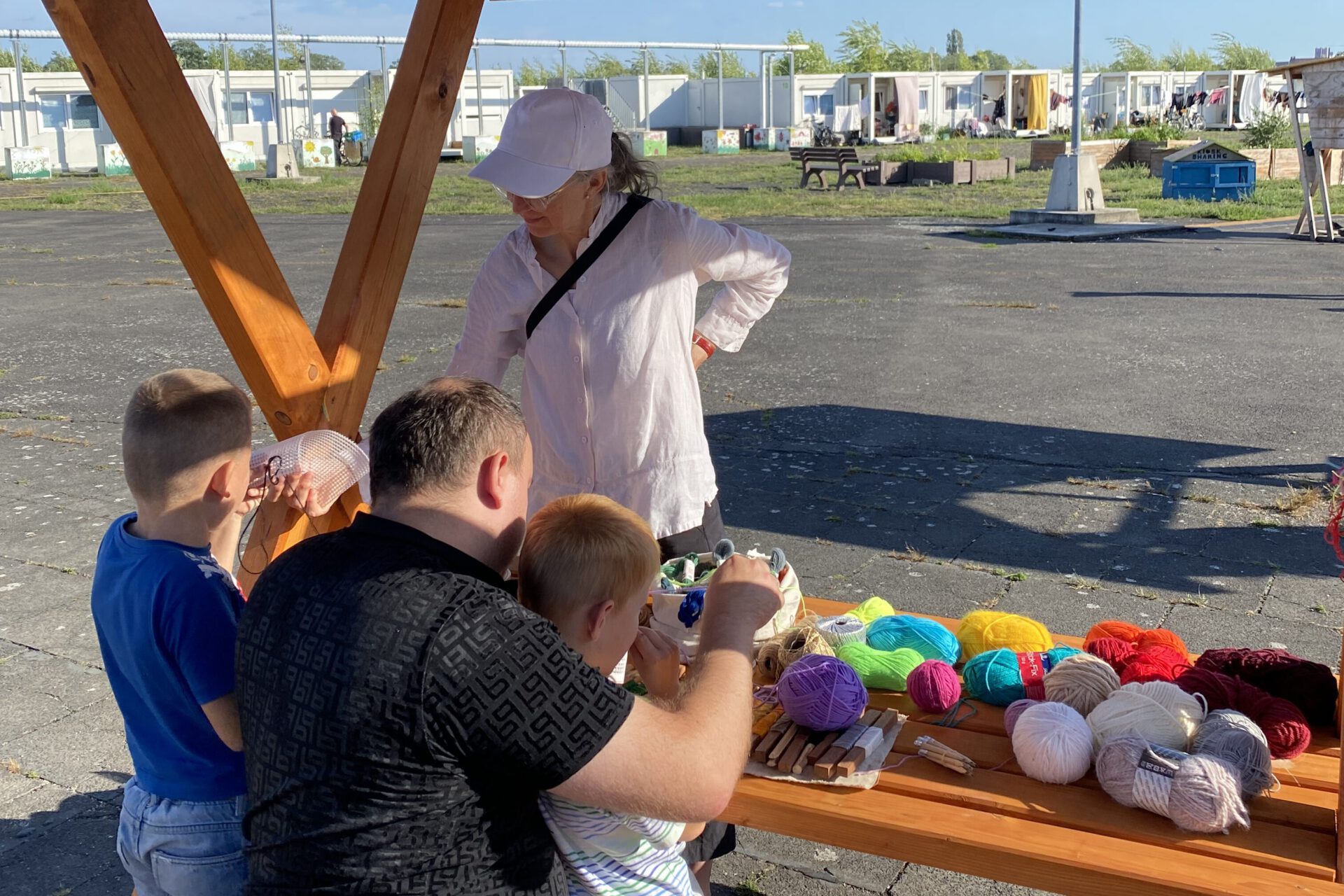
Hidden Threads GU Columbiadamm Workshop | (c) Maryna Markova
Hidden Threads GU Columbiadamm Workshop | (c) Maryna Markova
Hidden Threads GU Columbiadamm Workshop | (c) Maryna Markova
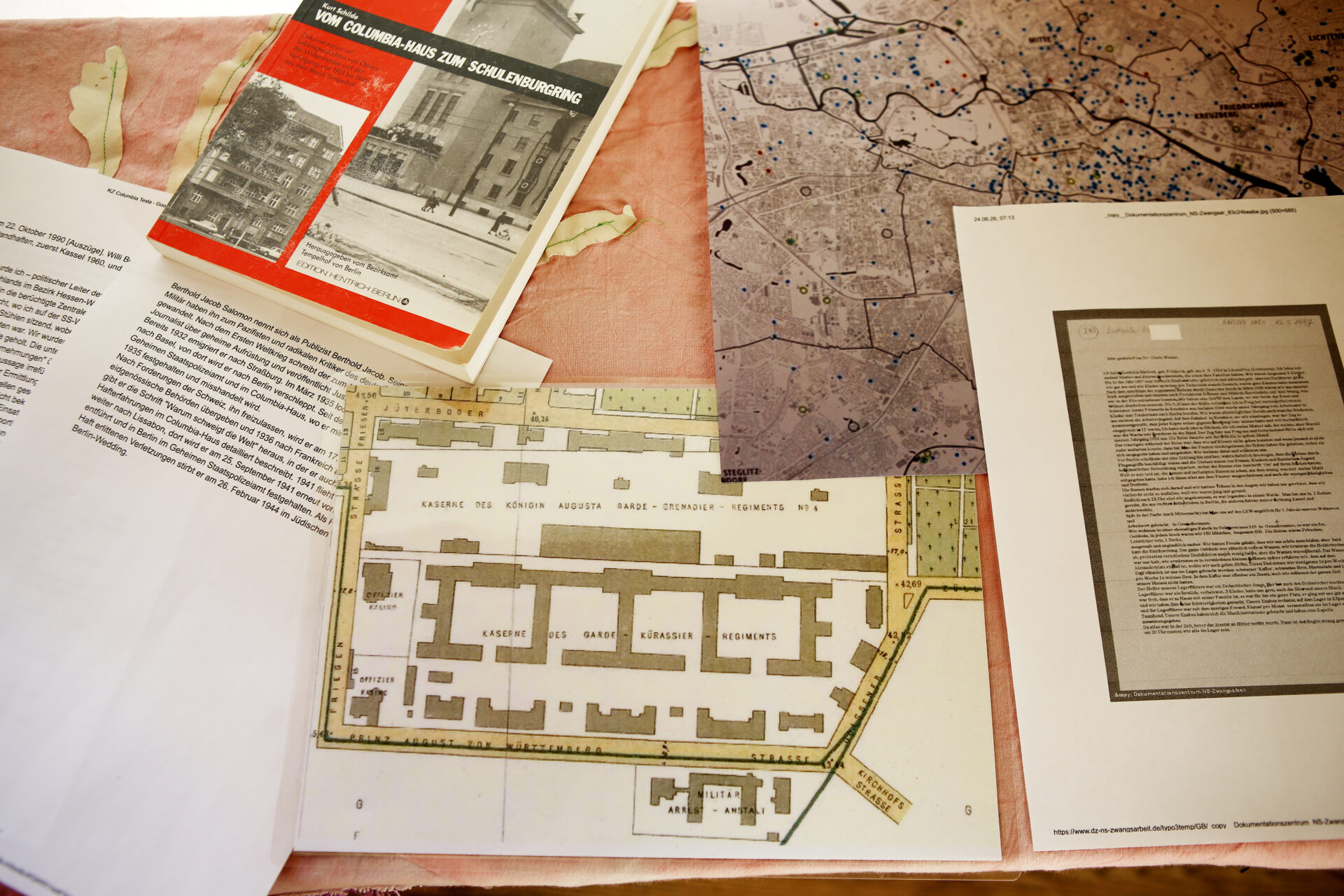
In the workshops, Silja Teresa Huppertz and Ute Lindenbeck share key findings from their research on the history of forced labor in Berlin. The scale of forced labor during the Nazi era was enormous: Starting in 1942, up to 500,000 people were forced to work in Berlin. There were approximately 3,000 camps and barracks within the city limits. For a long time after 1945, this history was largely ignored. It wasn’t until the 1980s that the first comprehensive efforts to commemorate this period emerged – often at the initiative of citizens. These efforts were, and continue to be, delayed to this day in order to avoid paying compensation.
The continuity in terminology – that is, the way people talk about migration and work – was also surprising. The Nazis referred to forced laborers as “foreign workers,” thereby obscuring the violent nature of their exploitation. The term persisted even after 1945 and was increasingly replaced by “guest workers” in the 1960s. Today, the term “foreign workers” is used. The question is which notions of belonging, work, and temporary residence continue to be reflected in these terms to this day.
Research into the Columbia concentration camp revealed that the crimes of National Socialism were already being publicized during the Nazi era. For example, as early as 1936, the journalist Berthold Jacob published the anthology *Why Does the World Remain Silent?* in Paris, documenting the brutal conditions of detention and methods of torture at the Columbiahaus. Unfortunately, there was no widespread public reaction.
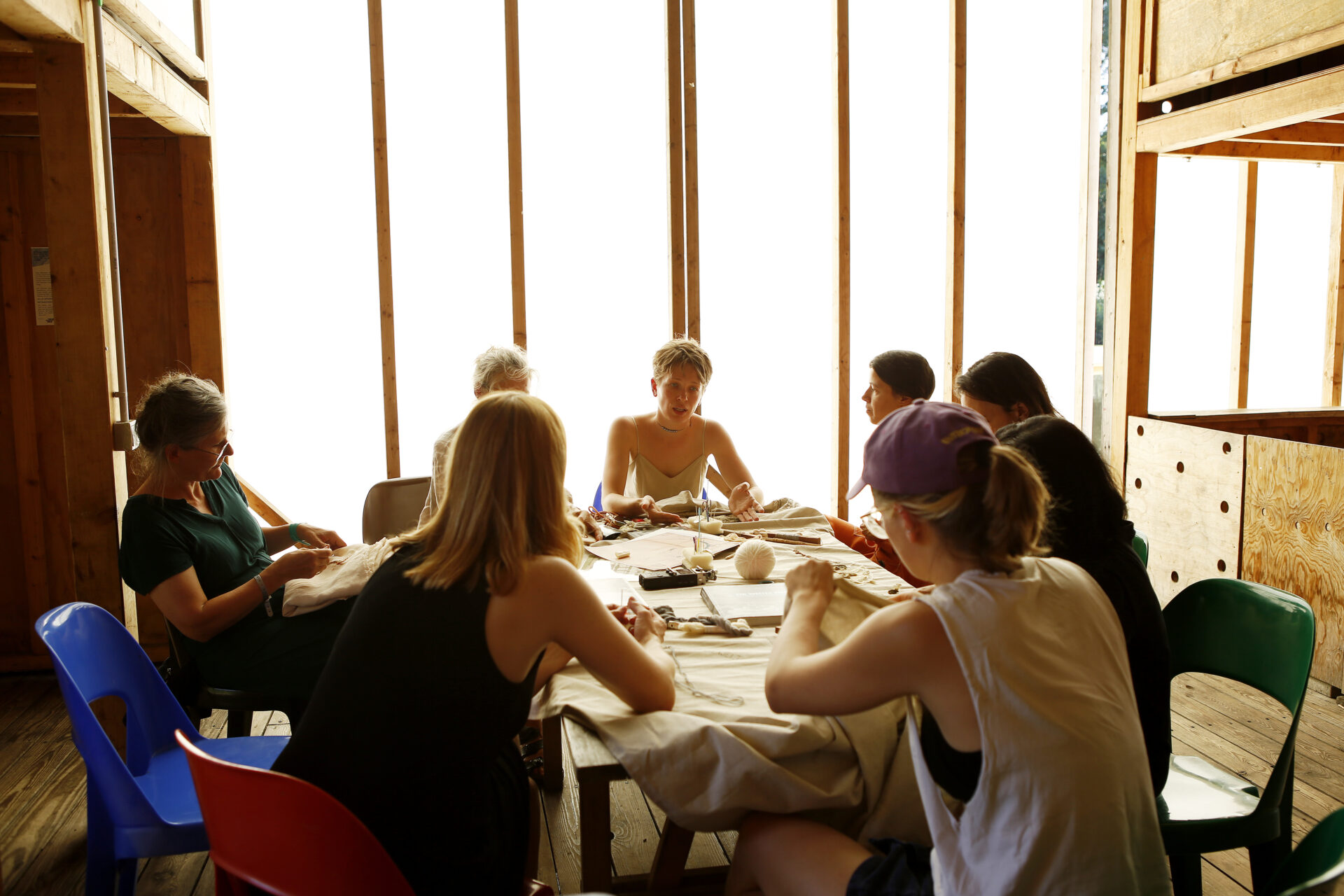
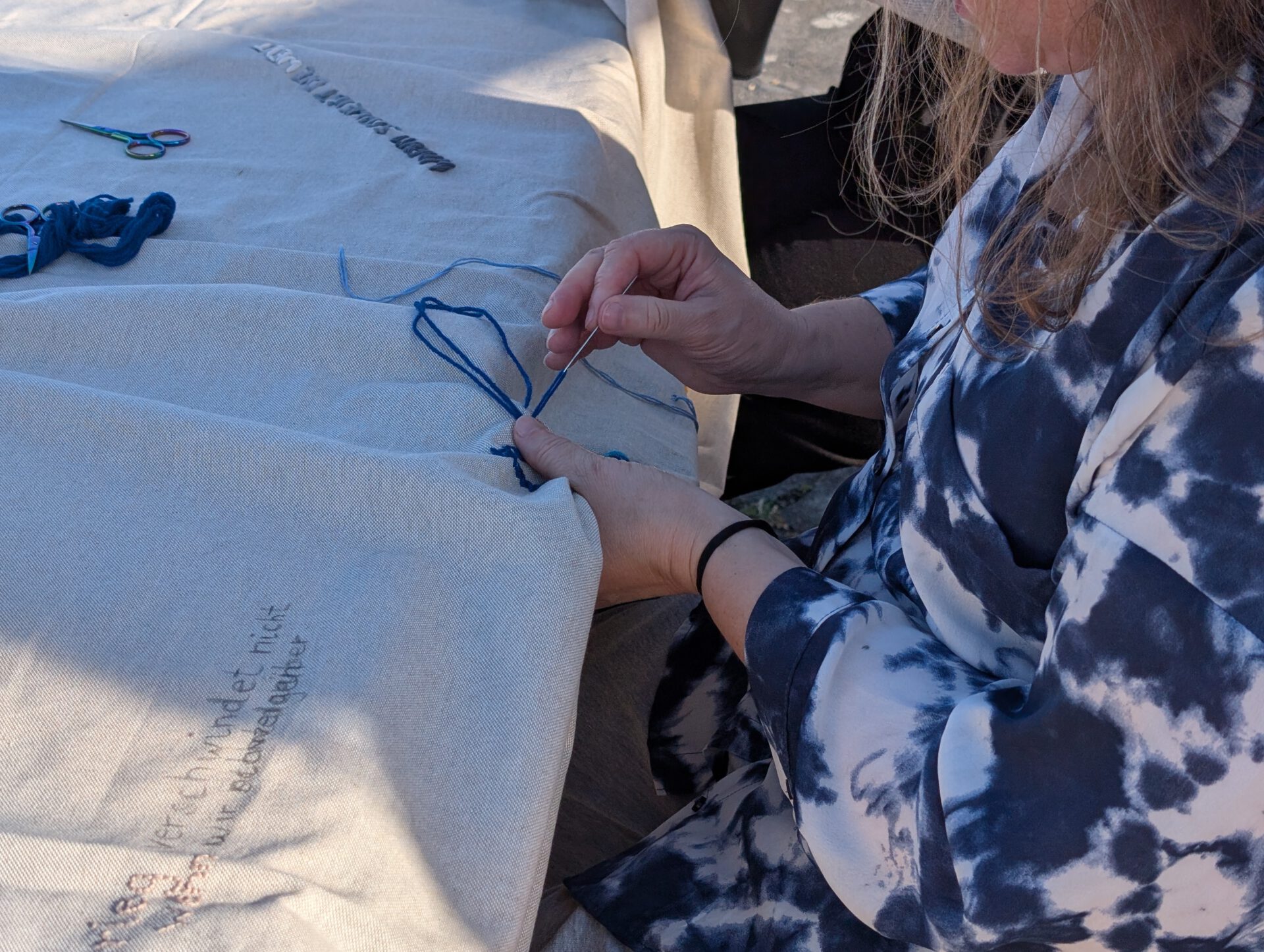
A key insight from the workshop was that, even today, there is a lack of spaces and formats where people can share their diverse experiences of war, migration, and work. Embroidering together proved to be a helpful approach: while the hands are busy, thoughts can be expressed without the need for an immediate reaction or rebuttal. Experiences from different countries and generations were able to intertwine and were literally woven into a shared fabric.
For the Ukrainian participants, the history of forced labor holds special emotional significance. Memories of deportation and forced labor remain vivid in many Ukrainian families to this day. While there are institutions and memorial sites in Germany, a personal and familial connection is often missing.
Yet looking to the past offers a perspective on the present. Many Ukrainian women living in Germany today work in precarious employment situations despite having a good education. The historical examination of forced labor therefore became the starting point for questions about the distribution and recognition of work, as well as migration and social participation.
Research
Exhibitions we Visited and Recommend
Dokumentationszentrum NS-Zwangsarbeit
Britzer Straße 5 | 12439 Berlin
The Nazi Forced Labour Documentation Centre in Berlin commemorates the fate of the more than 13 million men, women and children who were exploited as forced labourers in the German Reich during the Second World War. It is located on the historical site of an almost completely preserved forced labour camp in Berlin-Schöneweide.
Dokumentationszentrum Topographie des Terrors
Niederkirchnerstraße 8 | 10963 Berlin
Between 1933 and 1945, the site of today’s “Topography of Terror” Documentation Centre was home to the headquarters of the Nazi security and surveillance apparatus. In 1933, the Secret State Police had a “house prison” built in the basement of the south wing of the School of Applied Arts, which was intended primarily for political prisoners. A total of around 15,000 prisoners passed through this prison, and torture took place regularly in the Gestapo offices.
Papestraße SA Prison Memorial Site
Werner-Voß-Damm 54 a | 12101 Berlin
The Papestraße SA Prison Memorial Site is the only historical site in Berlin associated with the early Nazi terror where traces from 1933 can still be found. From March to December 1933, the barracks building – originally constructed for the Prussian Railway Regiments – housed an early concentration camp run by the SA.
Kiez Aktiv: Bockbrauerei
Bockbrauerei | Fidicinstraße 3 | 10965 Berlin
In the basement of the former Bock-Brewery Telefunken AG used forced labourers at its armaments factory to manufacture electron tubes for the military between December 1944 and April 1945. The initiative organizes historical tours in the basement.
More information and tour-dates
THF Tower: Lufthansa. Berlin-Tempelhof 1926–1945
THF TOWER | Tempelhofer Damm 45 | 12101 Berlin
The exhibition “Lufthansa. Berlin-Tempelhof 1926–1945. Between Civilian and Military Aviation“explores the history of Lufthansa at its former home airport from 1926 to 1945, taking a critical look at the company’s early years. It focuses on the complex interconnections between aviation, the state, industry, and the military, including the use of forced labor at Tempelhof Airport.