Situated Creative Practices for the Pluriverse
Creative Europe
Situated Creative Practices for the Pluriverse (SIT-PLU) is a Creative Europe Cooperation project tackling socio-ecological challenges through context-specific artistic interventions. Drawing on the Zapatista concept of the pluriverse—”a world where many worlds fit”—the project embraces diverse ways of knowing and living, foregrounding buen vivir (social well-being), communal interdependence, and the relationships between human and more-than-human entities.
SIT-PLU reimagines arts and culture as transformative tools for ecological renewal and social justice. It advances pluriversal discourses in Europe, bringing insights from Global Majority practices into European creative contexts.
SIT-PLU develops creative methodologies that respond to specific socio-ecological settings, bridging rural, peri-urban, and urban landscapes.
Methodology and Activities
SIT-PLU is structured around three main components: Situated Residencies (SIT-RES), Pluriversal Laboratories (PLU-LABs), and Practices of Encounter. These activities nurture artistic experimentation and knowledge-sharing across various European regions.
Residencies (SIT-RES):
ZEMOS98 (Spain): Exploring rural practices in the Cantabrian Mountains.
Idensitat (Barcelona): Engaging with urban-social dynamics near the Besòs River.
Lungomare (Bolzano): Investigating riverscapes and their ecological interconnections.
Baltan (Netherlands): Highlighting rural futures at Landpark Assisië in Noord-Brabant.
Pluriversal Laboratories (PLU-LABs):
LUCA Lab (Ghent): Situated at Park/Castle Ter Beken, this lab challenges anthropocentric narratives through inclusive, multi-species storytelling and community collaboration.
EINA Lab (Barcelona): Focused on the urban-peri-urban transition at Collserola Mountain, the project explores the synergy between the natural park and the EINA campus through regenerative design.
UPV Lab (Valencia): Redirected its efforts to documenting the impact of the October 2024 DANA floods, which severely affected the Valencian community.
Practices of Encounter:
Led by Floating University, Practices of Encounter works towards creating a culture of collaboration and mutual learning among partners. A series of in-person assemblies and online agoras offer moments for collective reflection on site-specific practices and interventions —questioning how they respond to place, evolve over time, and resonate across contexts. These ongoing exchanges keep methodologies open and adaptive. Over time, the insights emerging from this process will be brought together in an Interactive Atlas —a sort of carrier bag— a collection of situated approaches for arts and culture practitioners working towards socio-ecological transformation.
First Encounter: Berlin
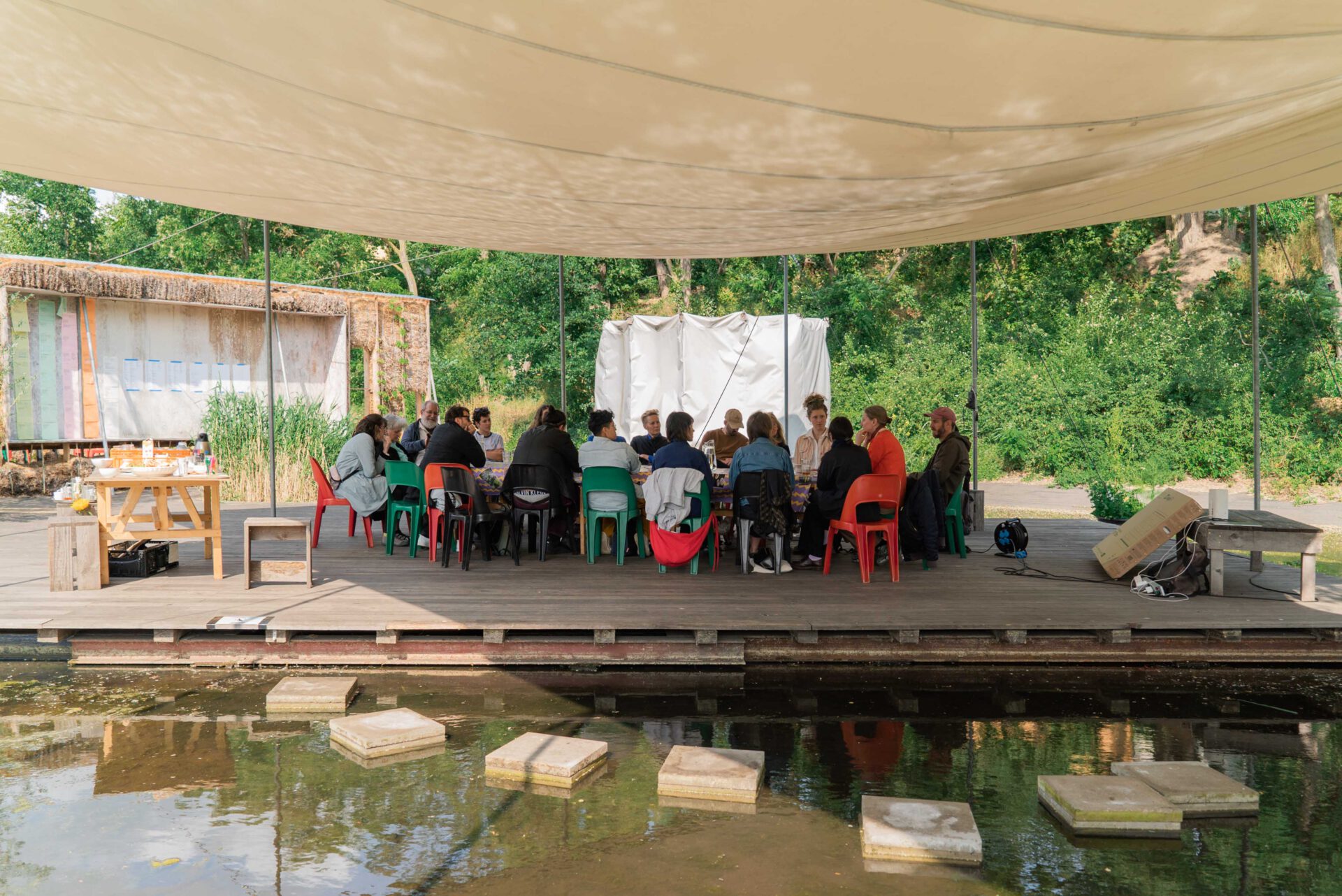
Images: Sebastian Díaz de León
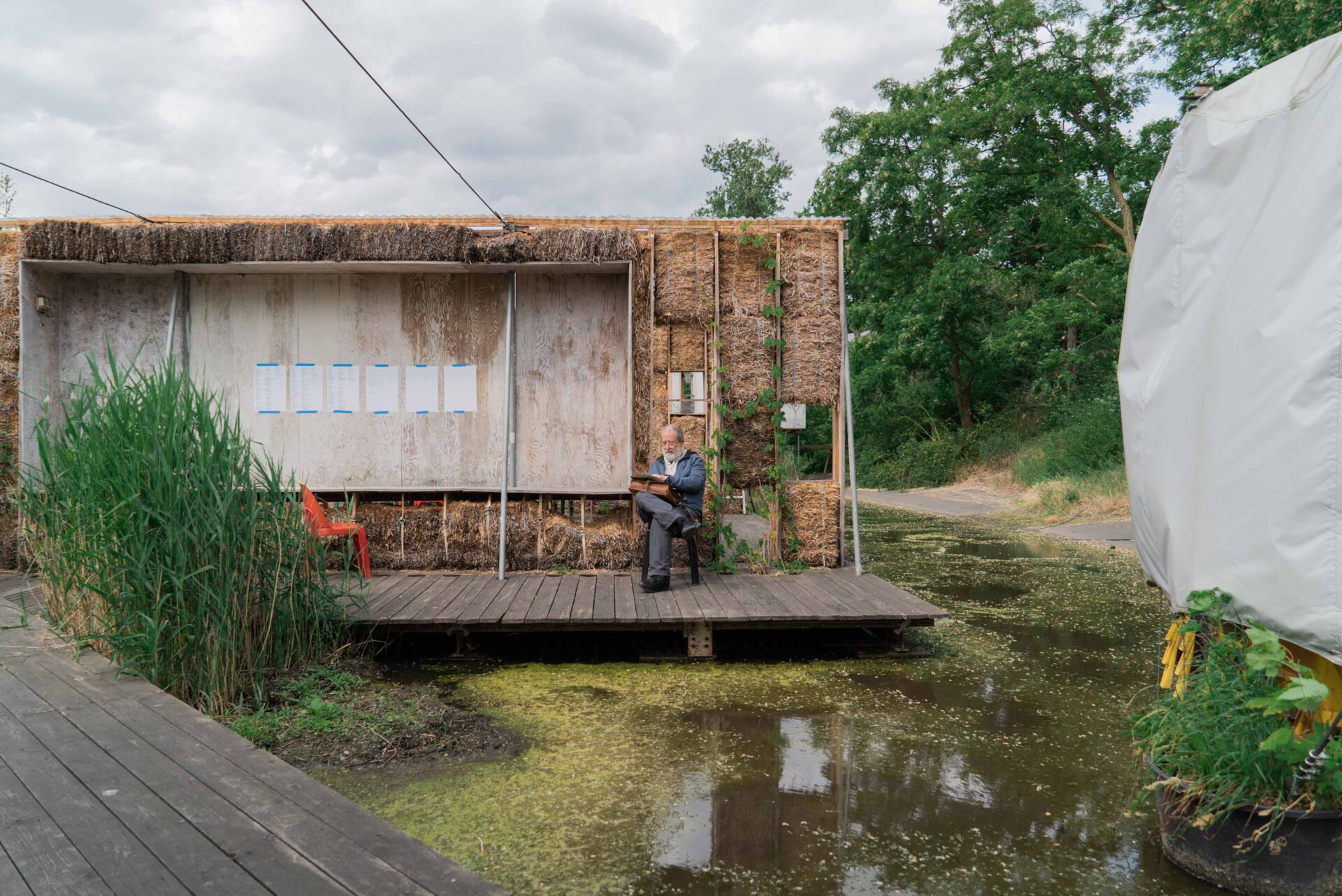
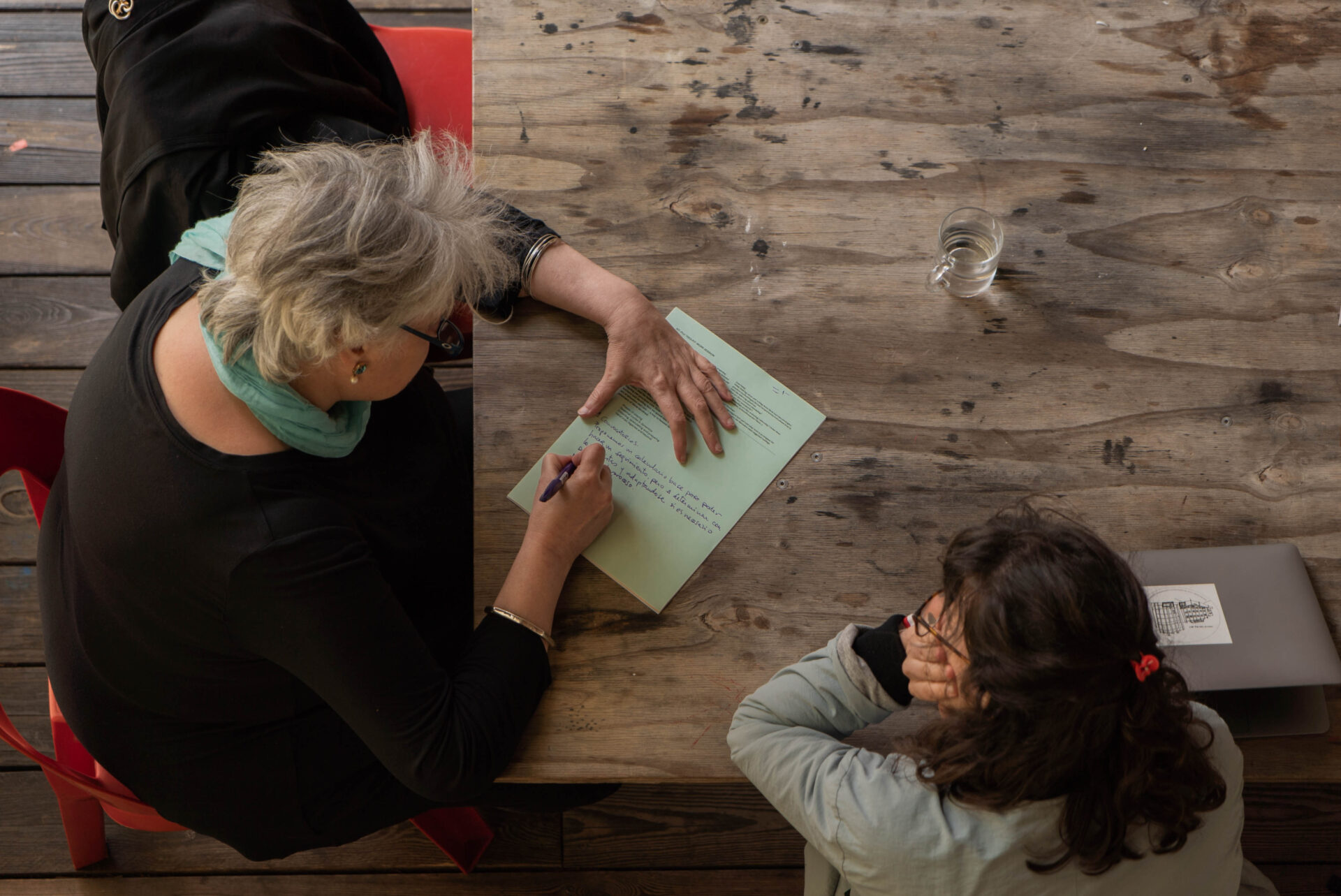
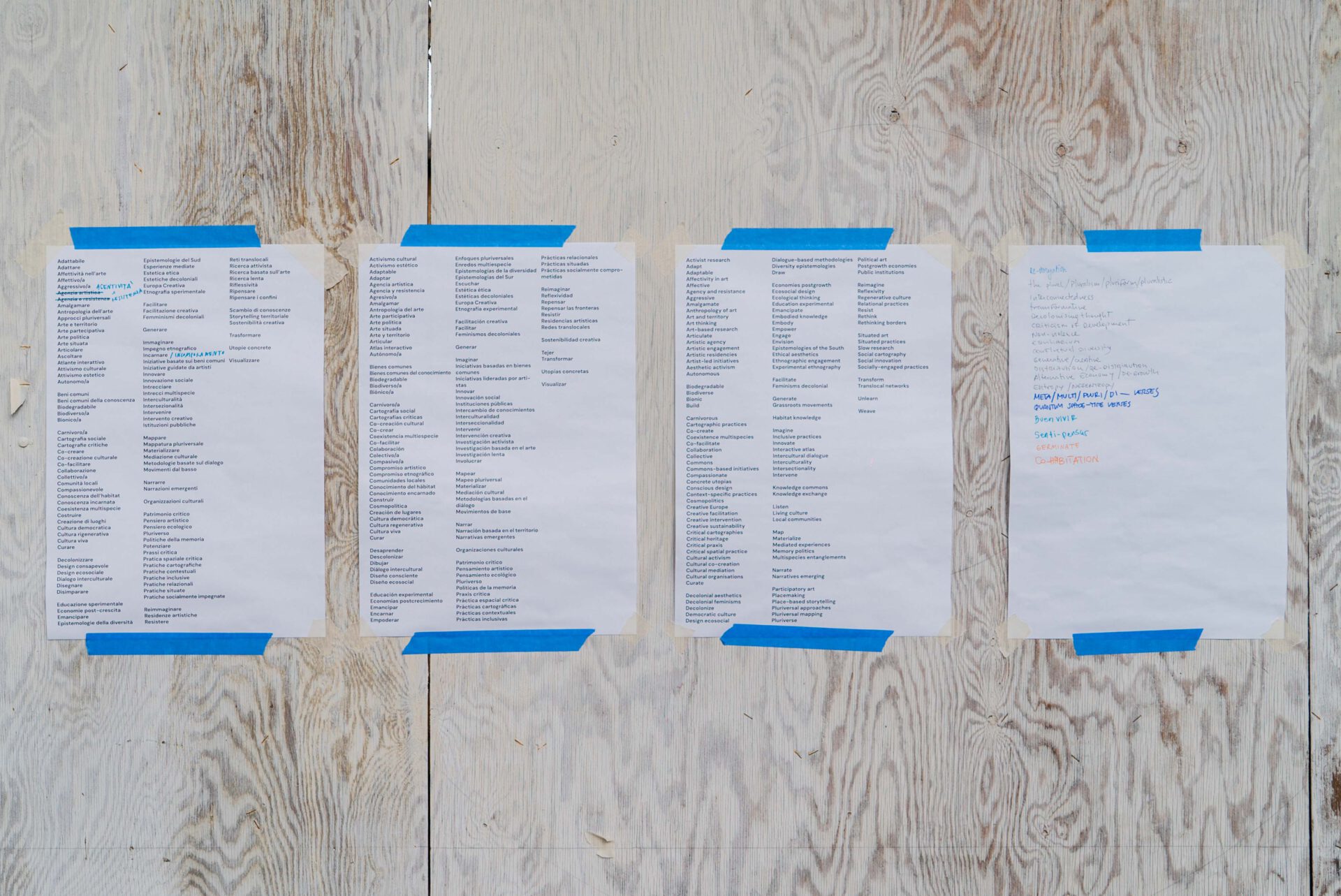
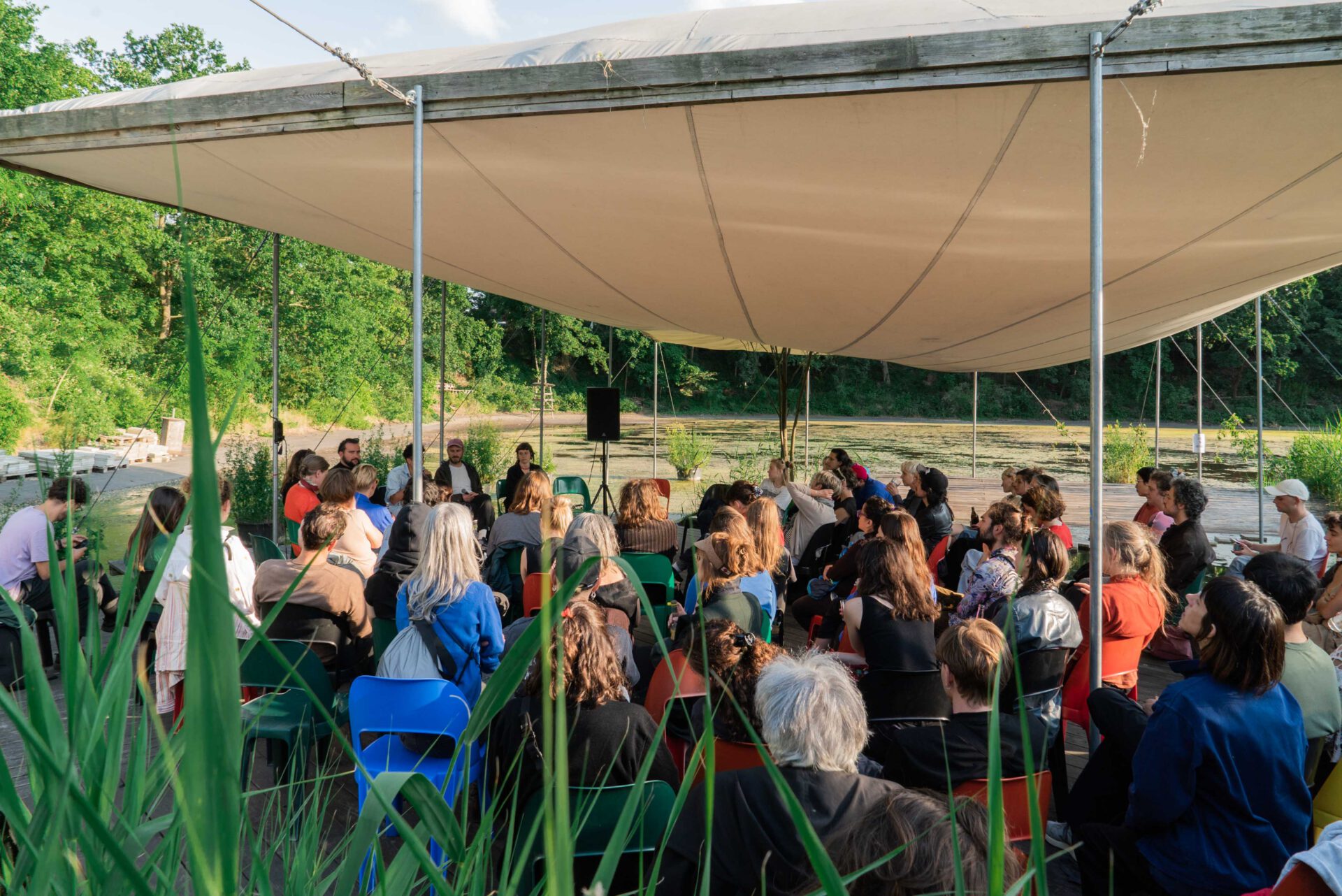
The first Practices of Encounter gathering took place at Floating from 5–7 June 2025, marking the moment when all consortium partners met in person for the first time. Over three days, the programme unfolded through shared meals, walks, work sessions, and conversations across various spaces at Floating University—from the auditorium to the urban forest, the kitchen, and the rain palace.
The group dedicated time to playfully engage with the visual identity tool co-developed by Lungomare and Baltan; took part in a toolkit session that redefined it as a companion; discussed next steps during the steering board meetings; and visited SPORE Initiative. On Friday, the public event featured a conversation with Elizabeth Gallón Droste, Pablo Calderón Salazar, and Lorenzo Gerbi, moderated by Rosaura Romero, on artistic practices within the pluriverse, radical pedagogy, and community-led knowledge. The evening also served to share the project more broadly and respond to questions about the open call for residencies.
A question that emerged during this meeting and continue to guide the process is:
How to resist romanticised imaginaries about the “pluriverse” and instead find the pluriverse wherever we inhabit?
Companion for Situated Practices for the Pluriverse
Edited by Vida Rucli and Rosario Talevi
Graphic Design: Sebastián Garbrechzt, persona studio
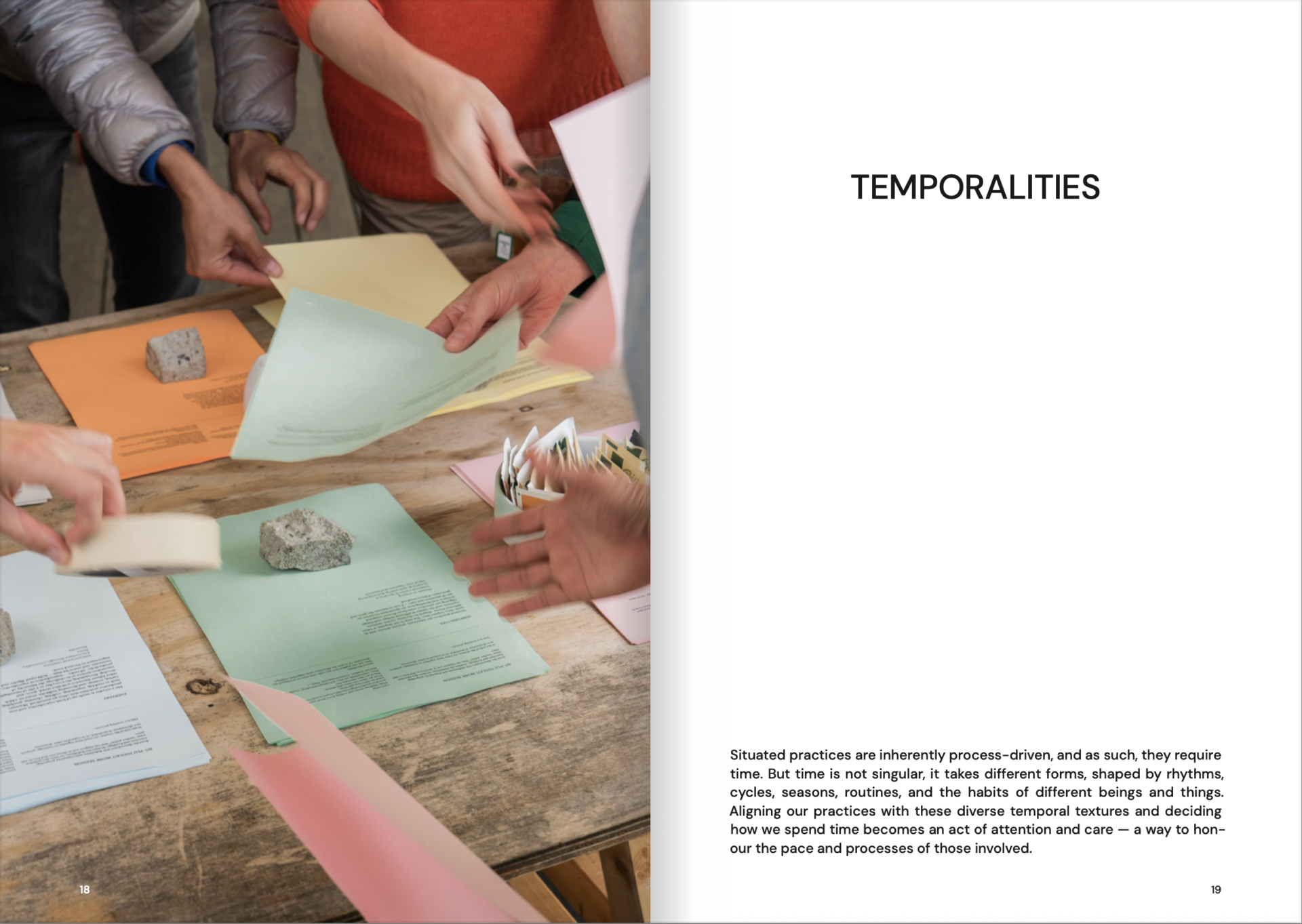
Image: Sebastian Díaz de León
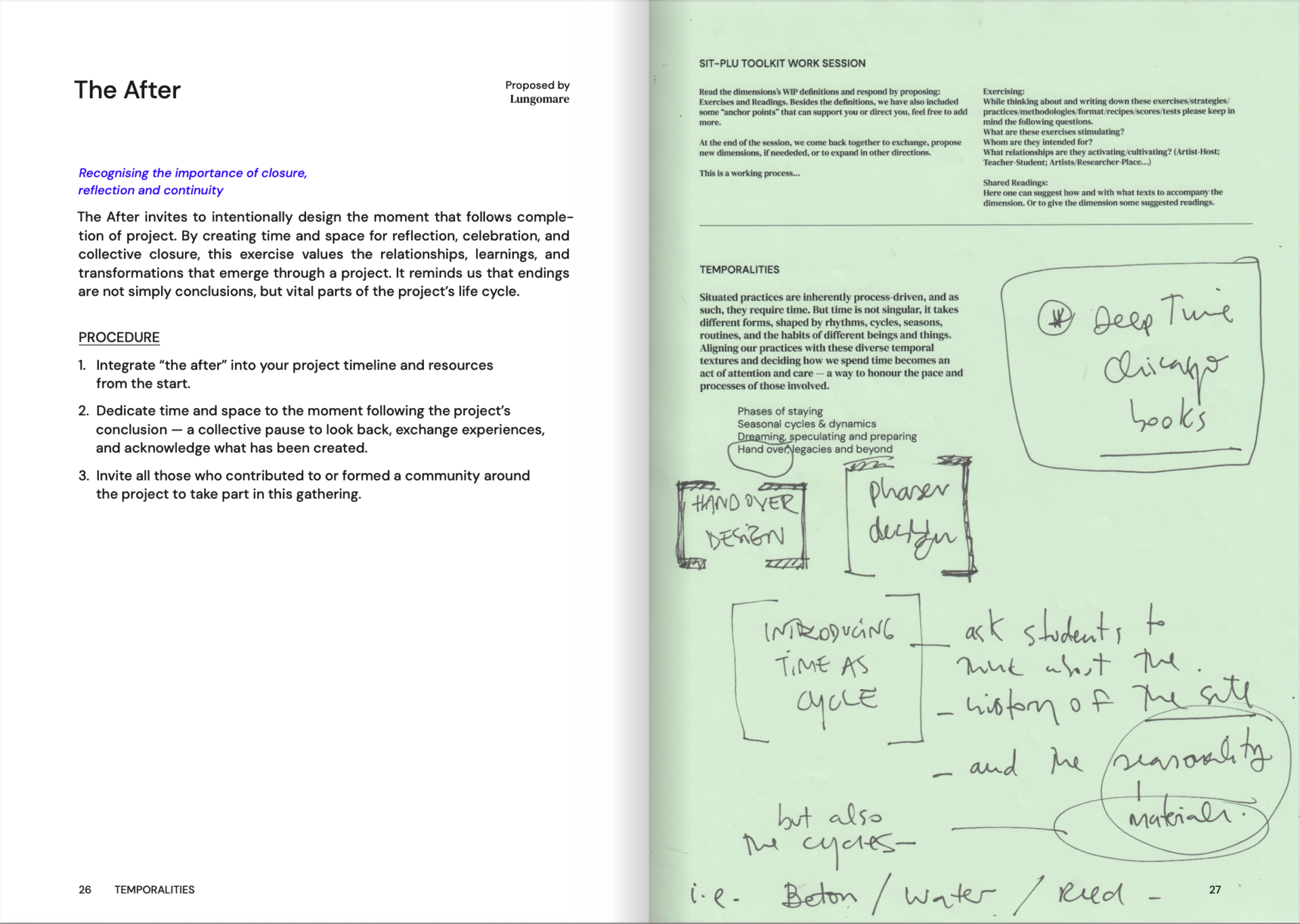
Exercise from the Kick-Off meeting in Berlin
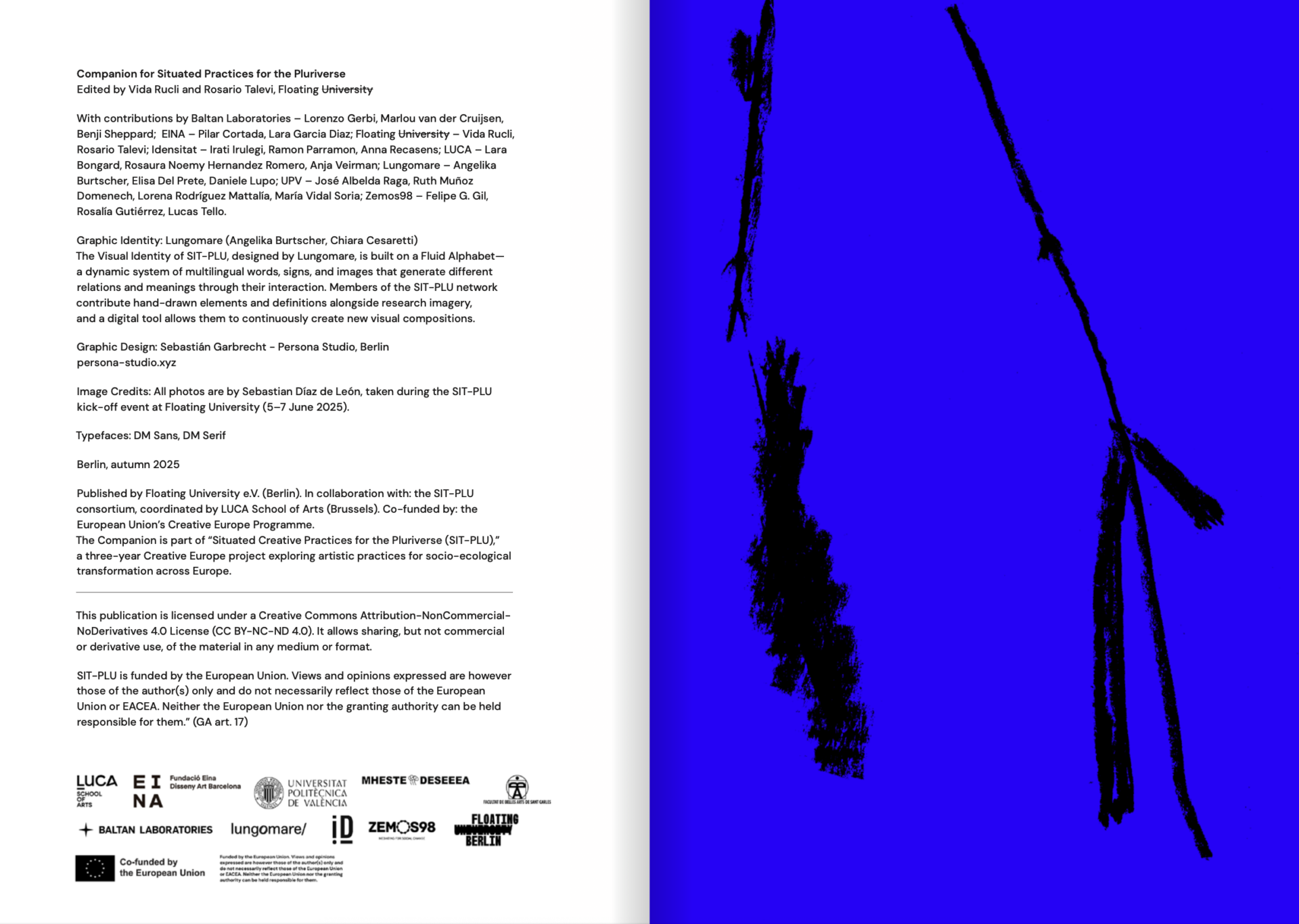
The Companion for Situated Practices for the Pluriverse gathers a set of practices — exercises, formats, prompts, scores, and group experiments — developed as a collaborative endeavour by members of the SIT-PLU network. Each practice proposes diverse ways of activating relationships between people, things, and places, exploring how research and artistic practice can unfold collectively. Rather than offering ready-made methods, these exercises are invitations to observe, listen and attend otherwise. They test how bodies, materials, feelings, and ideas interact in specific contexts. Some nurture care and trust within a group, others open time for reflection or attunement to a site.
This set of practices is intended for anyone involved in collective processes — artists, educators, researchers, students, hosts, and guests — and for those curious about how relationships can themselves become a form of knowledge. In different ways, these exercises cultivate the bonds that shape practice: between artist and host, teacher and student, researcher and place, individual and collective.
With contributions by Baltan Laboratories – Lorenzo Gerbi, Julia Kassyk, Marlou van der Cruijsen; EINA – Pilar Cortada, Lara Garcia Diaz; Floating University – Vida Rucli, Rosario Talevi; Idensitat – Irati Irulegi, Ramon Parramon, Anna Recasens; LUCA – Lara Bongard, Rosaura Noemy Hernandez Romero, Anja Veirman; Lungomare – Angelika Burtscher, Elisa Del Prete, Daniele Lupo; UPV – José Albelda Raga, Ruth Muñoz Domenech, Lorena Rodríguez Mattalía, María Vidal Soria; Zemos98 – Felipe G. Gil, Rosalía Gutiérrez, Lucas Tello.
Graphic Design: Sebastián Garbrecht – Persona Studio, Berlin
Download the Companion (printable version)
Download the Companion (digital version)
Agoras
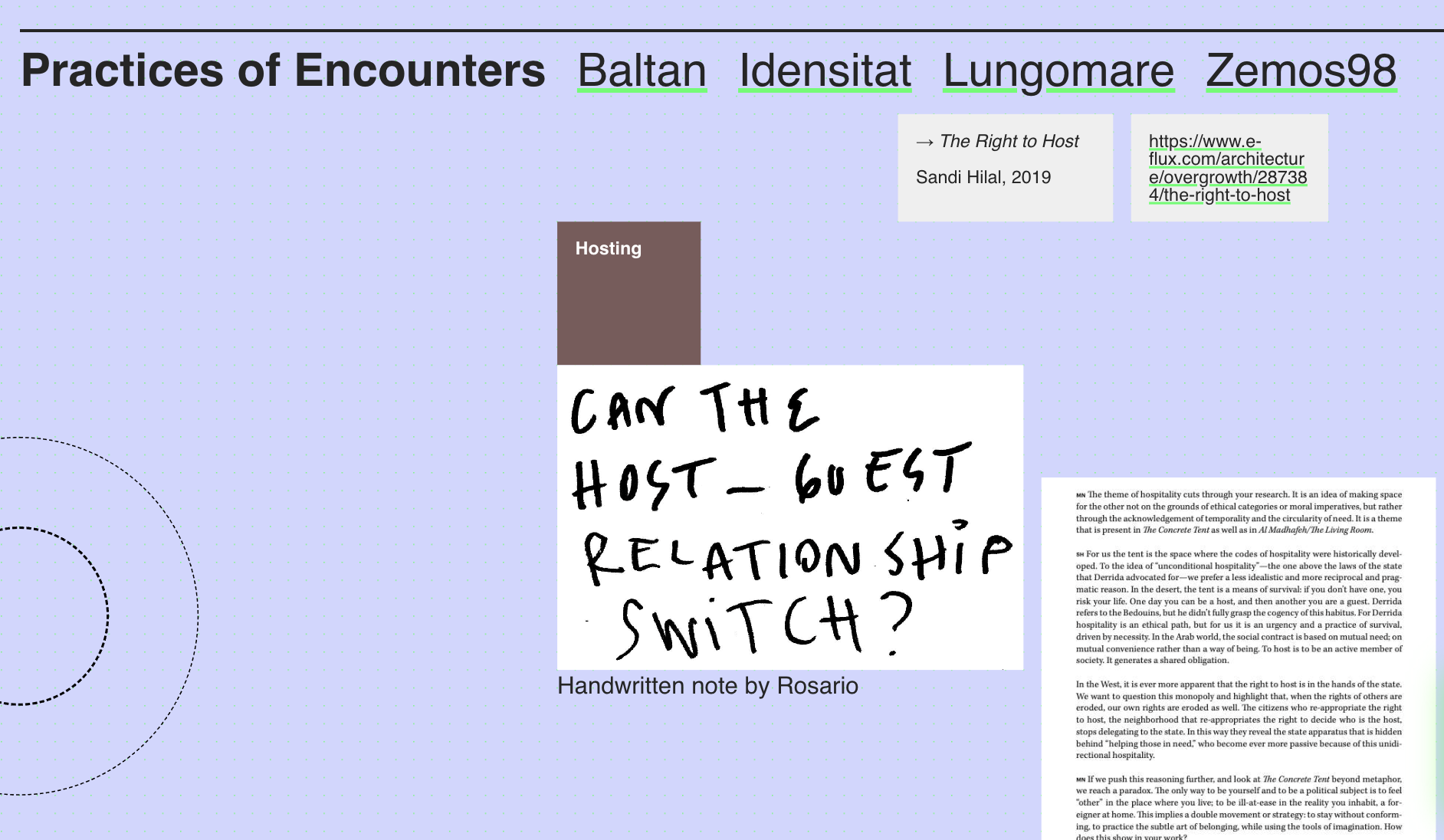
Screenshot from the Agora space, a digital platform designed by TAAT.
The online Agoras are conceived as shared, situated digital spaces for encounter, exchange, and reflection among the artistic residencies Baltan Laboratories, Idensitat, Lungomare, Zemos98 and their artists-in-residence. They are moderated by Floating University. Rather than functioning as a sequence of presentations followed by reports, the Agoras are structured as visits.
Each partner is invited to host a visit within a dedicated digital space, co-designed with the artists-in-residence as a shared room. Over the course of the two-hour Agora, the group moves between these rooms, with each residency temporarily hosting before passing the role on. Each room serves as a digital extension of the site, shaped by the residency and the artists-in-residence through spatial arrangements, materials, references, citations, and ongoing questions.
This approach draws on the idea that hospitality is not a fixed role but a practice that requires movement, reciprocity, and the possibility of switching positions. Artists-in-residence are not only guests of the hosting organizations but are also invited to temporarily assume the role of host, guiding others through their processes and research trajectories. Hosting is approached as an everyday practice that can be rehearsed and redistributed, including within digital environments.
Floating University is the convener of the series of encounters. Each session begins and ends in the Practices of Encounter’s room, which serves as a point of departure and return. From there, participants move into the spaces of each residency. At the end of each session, the group reconvenes for an open forum to reflect, connect threads, and situate the encounter within the broader constellation of the SIT-PLU project.
Hosting, visiting, listening, weaving and processing are the five verbs chosen as conceptual and methodological guidelines for the Agoras. They indicate a path that starts with encountering and moves towards engaging with the materials, reflections and questions brought up in the Agoras, while also stating the intentions behind these recurring exchanges. With hosting, we understand the reciprocal gestures of welcoming, showing around, setting the atmosphere, introducing and holding space; with visiting, we mean the repeating practice of being in relation across space and time, moved by curiosity; with listening, we suggest a more-than-sonic practice made of attention and awareness; with weaving, we indicate a desire in finding connections, overlaps and mingling between projects; and with processing, we understand a long-term, stratified sedimentation of sites, reflections and stories that emerge from the residencies, which we intend to bring together.
Across four sessions, the Agoras are intended to trace processes rather than outcomes. Residencies and residents are encouraged to consider how different moments reveal shifts, questions, and developments in the work. Over time, the accumulated materials form a living archive that makes visible both the evolution of practices through exchange and the gradual unfolding of the projects.
The Agoras take place on a digital platform designed by TAAT, an arts collective that develops environmentally engaged installations for embodied encounters between human and other-than-humans. The Live Agora combines live conversation with a shared, editable visual workspace. Participants can design their space freely, using simple text, images, audio, or links. While listening and speaking, visitors can annotate, add references, and contribute in real time. This supports a form of collective attention that unfolds both verbally and spatially, enabling collaboration rather than one-directional communication.
Valencia Assembly
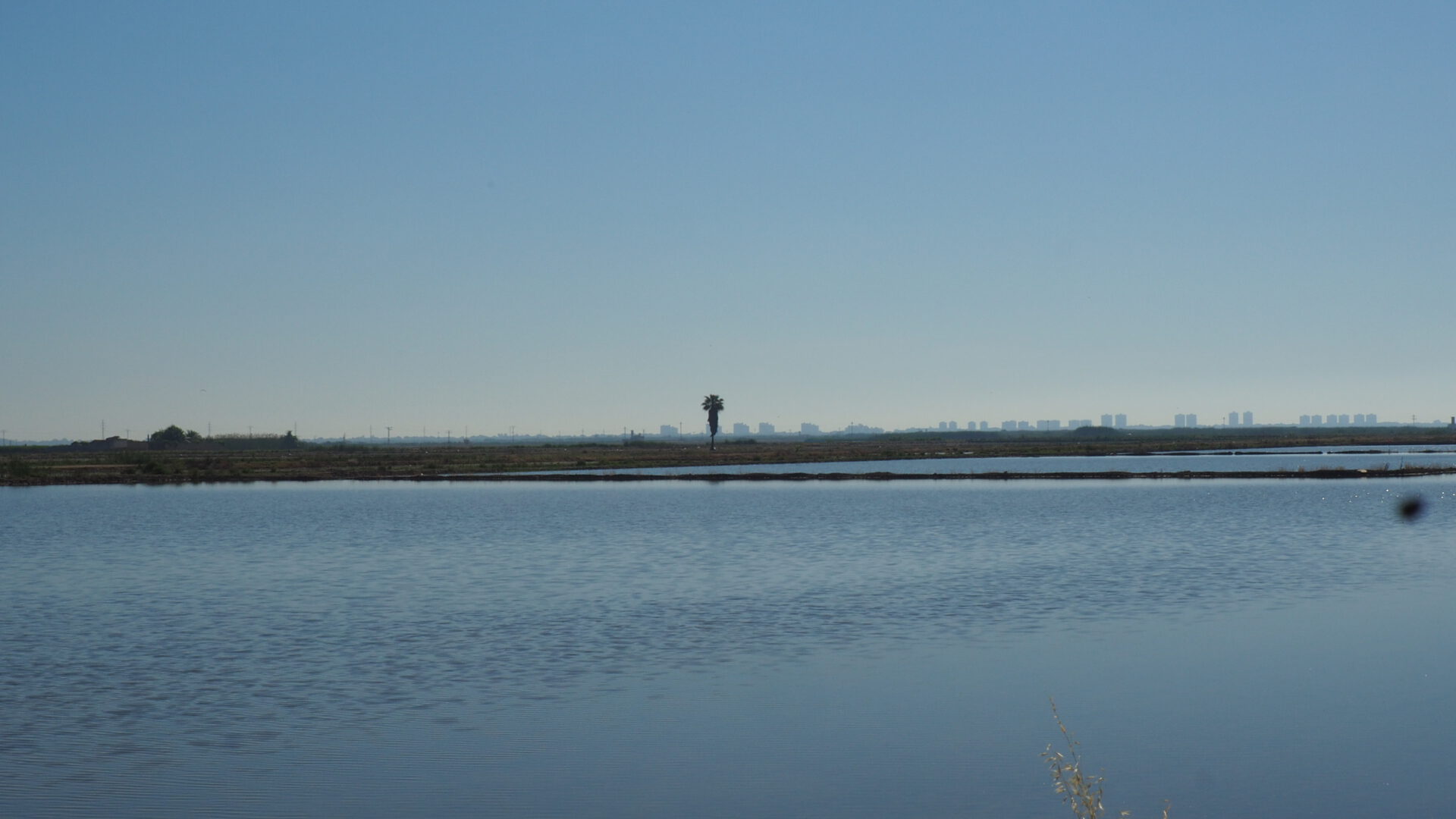
Visiting Albufera National Park (Photos by Diego Faibez)
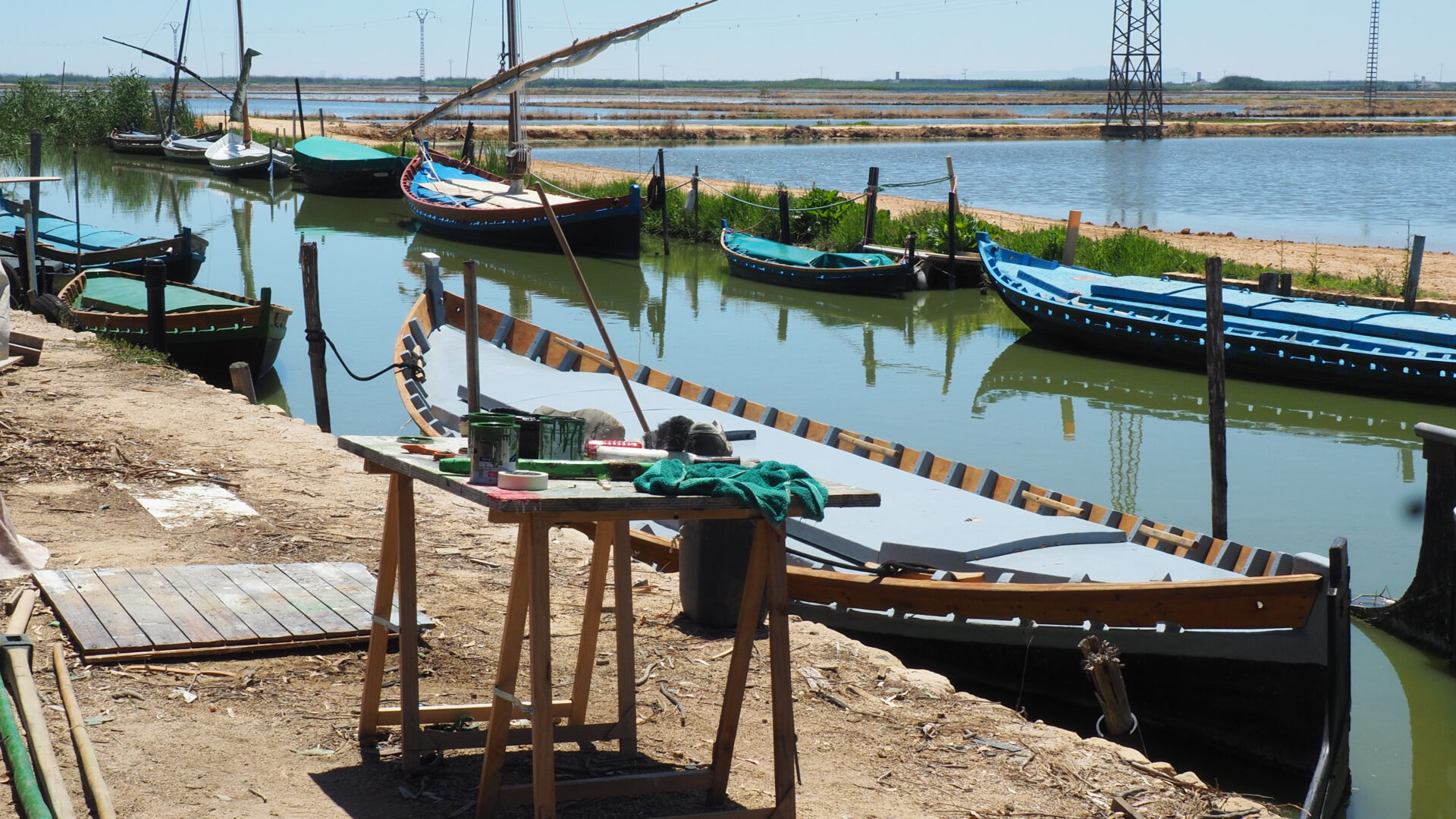
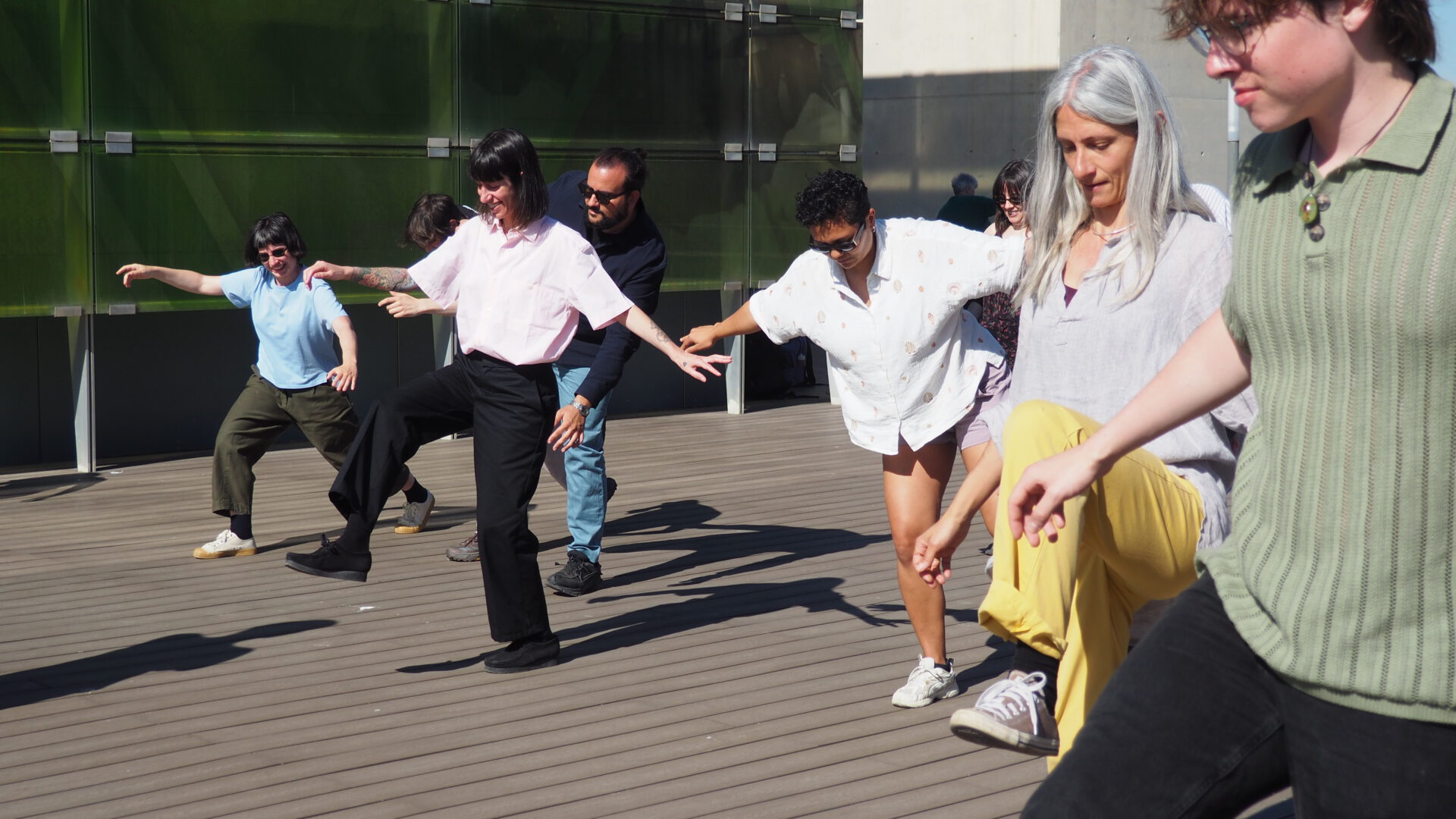
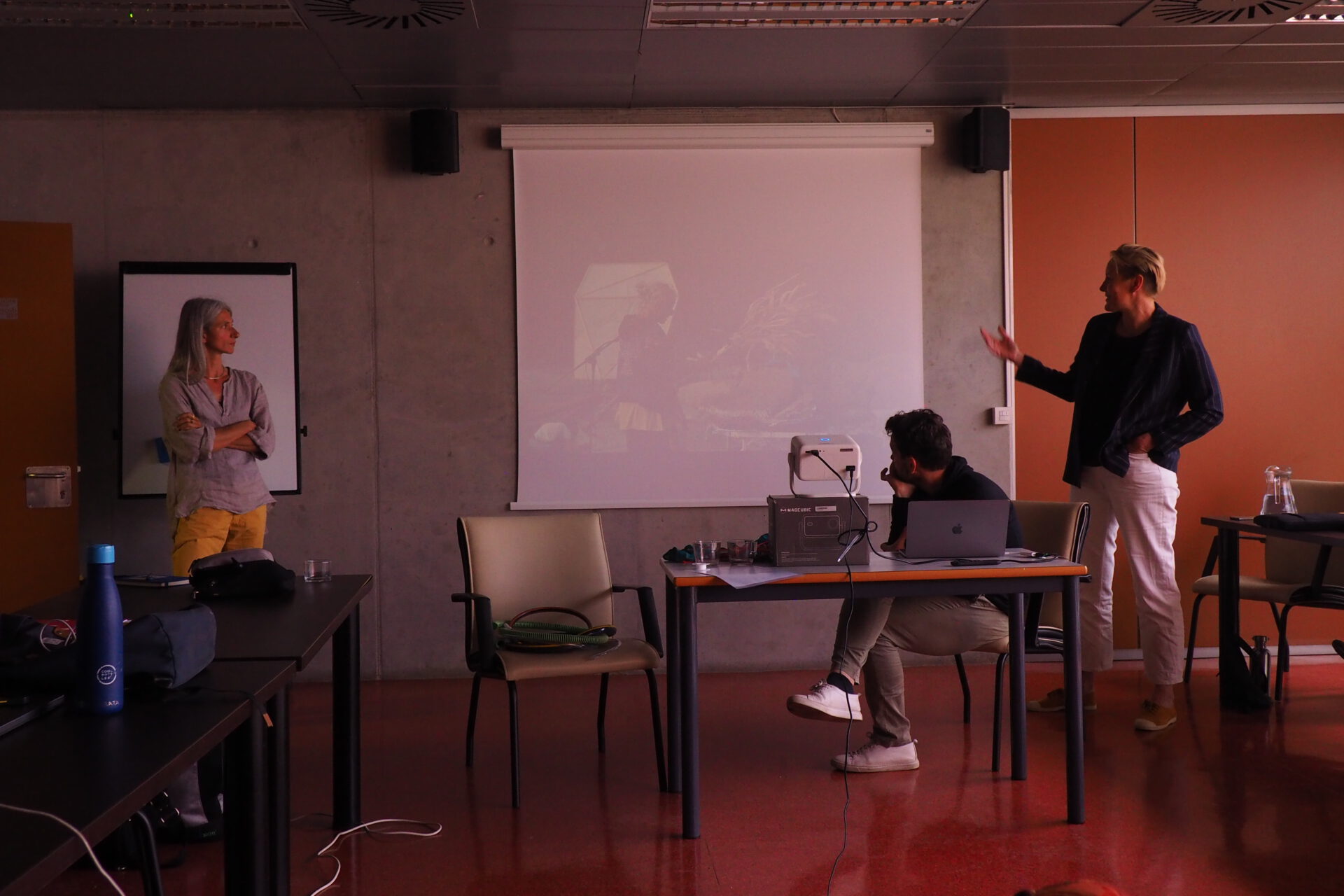
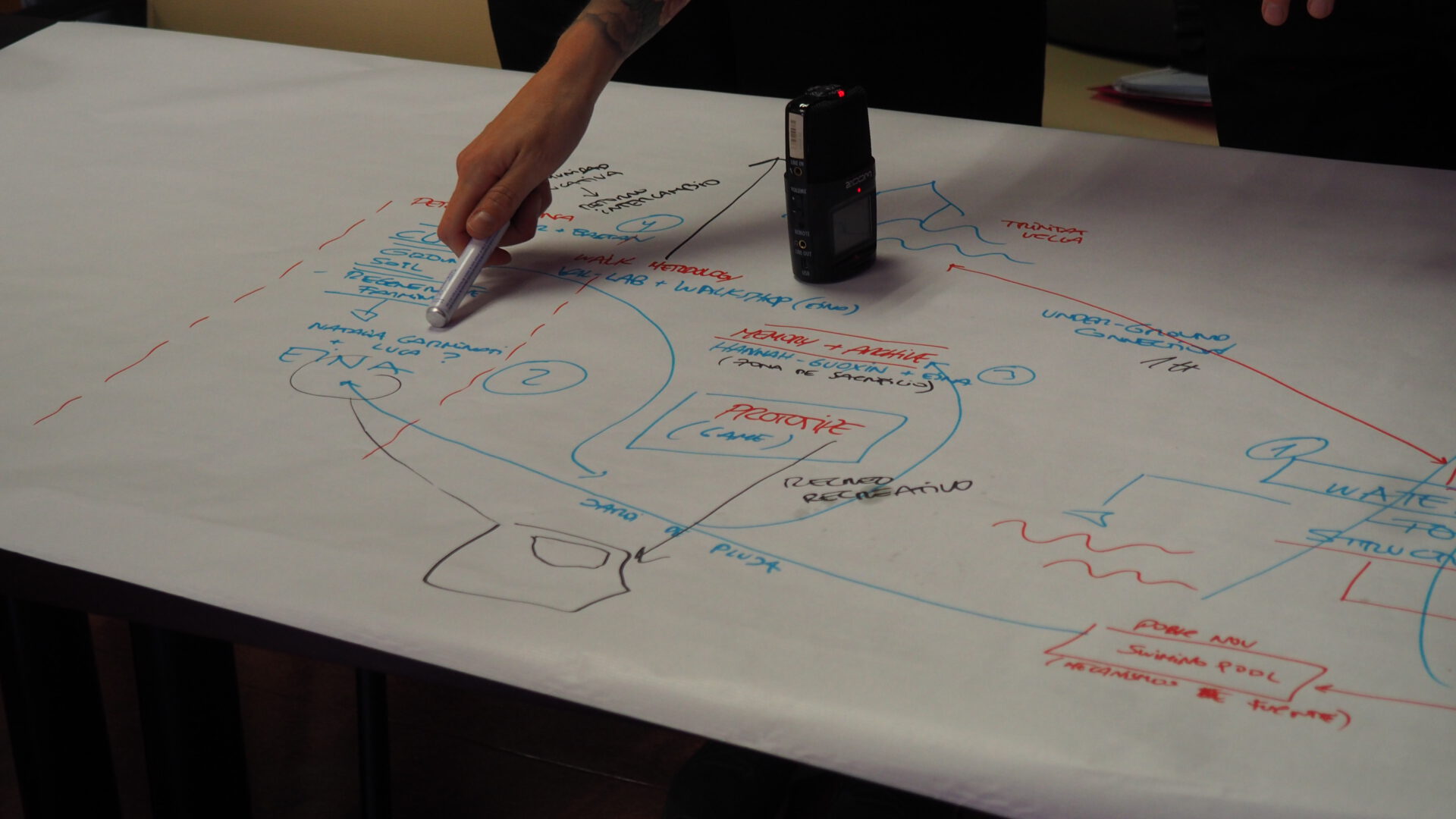
The second Practices of Encounter gathering, Sit-Plu’s annual assembly bringing together all project’s partners, took place in Valencia between May 20th and 22nd 2025. Hosted by UPV and facilitated by Floating, the assembly created a space to exchange updates on the development of Situated Residencies and Pluriversal Laboratories, to cross-pollinate themes, methods and trajectories emerging across the different projects, and to plan future collective steps.
Following the situated approaches that shape all residencies and labs, each Practices of Encounter gathering starts with a desire to explore the sites connected to the hosting partner. In Valencia, the first day started with a visit to Albufera National Park, the freshwater lagoon and estuary on the Gulf of Valencia coast. This nature-culture site, where a rice cultivation, fishing practices, local irrigation systems and protected flora and fauna coexist, is central in the research of the UPV Pluriversal Lab. In 2024, Albufera was heavily affected by the DANA floods, which form a central focus of the Lab’s ongoing work. A guided visit introduced us to the ecology of the wetland and to the systems that regulate water levels through pumps housed in small traditional buildings alongside the rice fields.
We then traversed the lagoon by boat and arrived at a site inhabited by the associations of traditional boat sailors and fishermen. Representatives of both associations shared histories of human engagement with the lagoon and reflected on how these relationships are changing today. Throughout the morning, conversations moved between the impacts of DANA on the waters of Albufera, the self-governance systems that have taken care of the site since the Middle Ages, and the ongoing shifts in the lagoon’s and fish populations.
During the afternoon we moved to the UPV Campus, where we spent the following two next days discussing, exchanging, sketching, drawing diagrams, planning and playing. The afternoon was dedicated to spontaneous micro-encounters, in which partners gathered around different questions and emerging directions: ideas for the project’s final publication, imagined as “a wild, pluriversal book”; proposals for the mid-term exhibition in Barcelona, exploring the idea of a two-day long “escuelita”; concrete approaches for the digital atlas; and theoretical concepts such sacrificial zones, latency, and permacomputing. The second day began with “Slow motion”, a game proposed by Pablo Calderón Salazar and based on Augusto Boal’s practice developed for the Theatre of the Oppressed. The activity is part of Boal’s book Games for Actors and Non-Actors(1992) which presents the principles and methods of his approach and explores how theatre can become a tool for collective transformation and liberation beyond professional performance.
The morning continued with presentations by all partners on their projects, research and residencies. The labs shared the methodologies they have developed with and for students, but also together with communities, activists, researchers, children, as part of their emerging curricula. These included caressage, a drawing practice that seeks to register contact with a landscape while avoiding representation, levantar el suelo, an approach for exploring the spectral archaeologies of the subsoil (EINA Plu-Lab); filmmaking practices used to document the effects of DANA in Valencia and engage with the region’s polycrisis (UPV Plu-Lab); and community supported agriculture developed in the school site through gatherings organized around seasonal markers such as solstices and equinoxes (LUCA Plu-Lab).
Partners organizing residencies presented the current state of their processes, focusing on the themes artists are exploring: the Besòs river as a witness of layered neighborhood histories (Idensitat), the Cantabrian mountains as sacrificial zones for wind energy infrastructures (Zemos98), pottery-making practices developed with fragile communities (Baltan), and watery micro-actions in public space (Lungomare). Situated residency partners also reflected on challenges emerging through the projects: tensions around working with experiences of pain while developing a board game (Zemos98), the delicate boundaries between artistic practice and social work (Baltan), and multilingual communities and the complexity of translation (Idensitat).
The afternoon was dedicated to discussions, maps, notes and plans for the future. In particular, we shared updates about the project’s atlas, conceived as a collection of materials, objects, anecdotes and maps that will travel between partners as a carrier bag accompanied with its own digital twin. The group also discussed the mid-term exhibition in Barcelona, reflecting on the exhibition format as a moment to “practice together”, rather than only present outcomes. We ended the day at the Faculty of Fine Arts, where the UPV team screened the short films developed through the open call, Projectar El Cambio.